• Skip to main content
  • Skip to footer

People Purpose Place

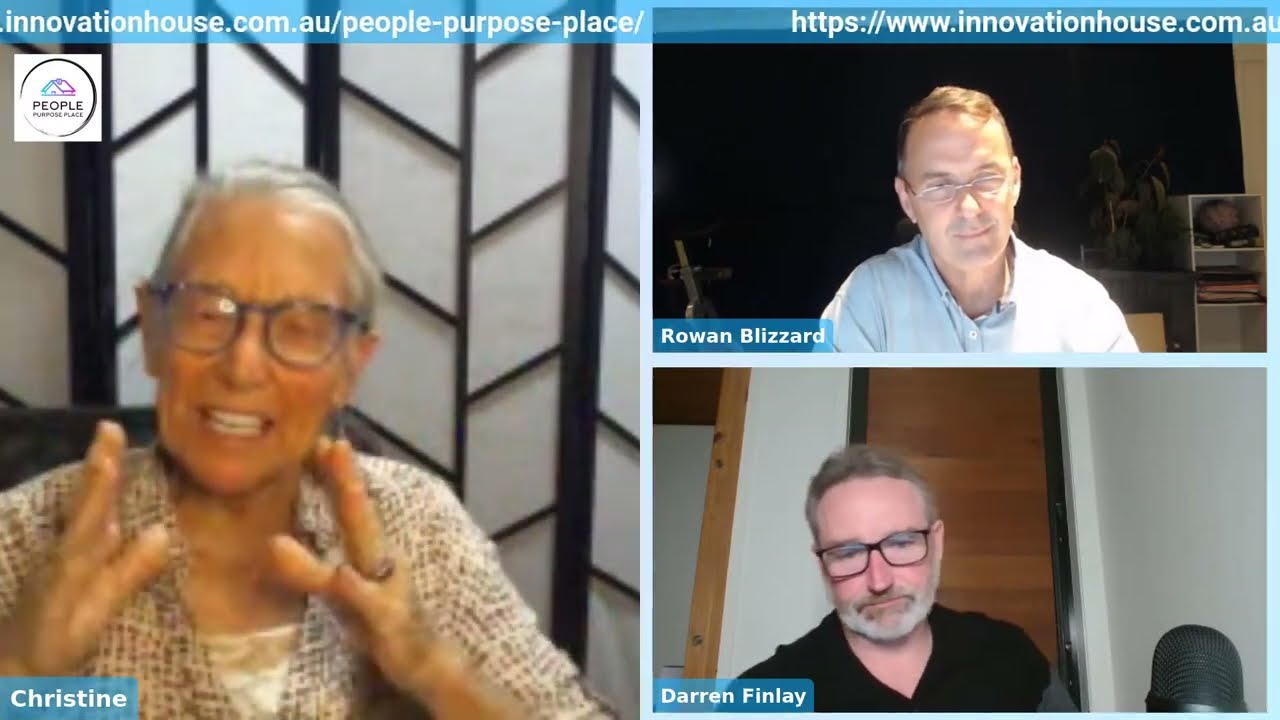
At People Purpose Place, we're solving the housing crisis one intentional household at a time. Discover some of our plans and examples in our PLACE discussion here.

  • People
    • Who Are You
      • Ethical Investor
      • Community Worker
      • Community Elder
      • Young Professional
      • Facilitator
    • Ambassadors
      • Jenny Sader Ambassador
      • Darren Finlay Ambassador
      • Rowan Blizzard Ambassador
  • Purpose
  • Place
    • Places
      • Ginn Road
    • Projects
      • Rifle Range Road
    • Regions
      • Far North Queensland
    • Connected Projects
      • Connected Project: On Natures Edge Flat Pack House
    • Case Studies
      • 11th Avenue Small Lot
      • Renovating and Improving
      • Granny Flat
      • 70 Square meter
      • Multi-Generational
      • Pavilion Home
      • Existing House – Atherton
  • About
    • Events
    • Becoming a Registered Charity
    • Darren Finlay
    • Christine Doan
    • Russell Lowry
    • Rowan Blizzard
    • Privacy Policy
  • Start Here
    • How We Help
      • Form Groups
      • Design Solutions
      • Deliver Projects
      • Support Long-Term
    • FAQ ORIG
    • Media Releases
    • Flyers
    • Featured Coverage
    • Toolbox
    • Workshops
    • Reference Page
    • Podcasts and Video Content
  • Contact
  • Blog
    • Media Releases
    • All Blog Posts

Purpose

Supply and Demand Housing: A New Perspective on Solving the Crisis

22 August 2024 Leave a Comment

When we discuss our current housing issues, people often find themselves in distinct camps of thought. Some argue that we need more supply (Australian Financial Review article here), while others insist that current housing is not meeting demand (Sydney University Everybody’s Home). But what if both statements are true? What if these perspectives are two sides of the same coin, revealing a deeper, interconnected issue in the supply demand housing dynamic?

More supply side argument here

Wow, my mind is blown!

supply demand housing

Imagine, for a moment, a world where we ask the very people who will build our future economy, parent our children, mentor our youth, protect our nation, and share their wisdom in their twilight years:

If we supply your housing needs, can you thrive with stress taken away?

Will you be content to double down and commit to the great Australian dream?

The answer is consistently evident. People understand what they want to contribute to society. Still, their current stressed circumstances—where over 30% of their household income is consumed by housing—make it impossible for them to be their best selves. They report that if they could have some certainty and security in their housing, they could get on with fulfilling their purpose.

Two significant concerns dominate the supply-demand housing conversation:

Tenure and Affordability

Tenure:

For about 4 million Australian households, renting in the private rental market is not a choice but a necessity. This market offers short-term, volatile, and insecure options for tenants. A twelve-month lease is hardly enough time before a significant price review or a complete change of purpose forces them out. Tenure insecurity is a constant source of stress for many, making it difficult to plan for the future or feel settled.

Affordability:

When large portions of household income are devoted to securing housing, there is little left for essential activities like preventive medicine, dental appointments, or even a car service. In the current market, rentals typically consume around 30% of household budgets, while mortgages can often take up to 50%. This strain leaves families with no room to breathe, let alone thrive.

But what if there were another way to secure and afford housing? A way that doesn’t conform to the traditional supply-demand housing model but instead embraces innovation and collaboration.

The Power of Small Groups:

A Solution for All

At People Purpose Place, we believe in the power of small groups to achieve great housing outcomes that work for all stakeholders. We have demonstrated this through our Ginn Road project, where working together has led to affordable and secure housing solutions.

Our approach flips the traditional supply/demand housing model on its head. Instead of individuals struggling to meet their needs alone, we bring people together to create housing that suits everyone:-

  • shift workers
  • emergency services personnel
  • young professionals
  • those needing accessible living options
  • care built-in

We act as an introduction agency that connects the supply and demand sides, accommodating all stakeholders’ needs. As a not-for-profit organization, People Purpose Place has minimal costs to cover, and our guidance typically saves money compared to business as usual.

Benefits Beyond Cost Savings

  1. When talking about cost savings, we’re not just referring to fewer sales commissions or luxury cars on the road.
  2. We’re talking about development that uses best practices rather than business as usual.
  3. Instead of offering standard fixtures and fittings, why not include a firepit and BBQ smoker if that’s what you’re passionate about?
  4. And if you don’t have a butler, why spend extra on a Butler’s Pantry?
  5. Finally, you can choose a tenure that suits you. If you’re looking for a five or 10-year commitment, we can accommodate that.

This flexibility is crucial in creating a housing model that works for everyone.

Ready to Start Your Journey?

Solving the housing crisis one HOME at a time

If you’re ready to embark on a journey toward affordable, secure housing, reliable, predictable, low-cost guideposts are available. Using this framework, you can clearly see that you’re on the right track toward a great home where you can thrive.

Let’s move beyond the traditional supply-demand housing debate and create a future where everyone has the security and affordability they need to live their best lives. Join us at People Purpose Place, where we’re turning this vision into reality.

Return to People Purpose Place home.

Filed Under: Education, Purpose Tagged With: #housingforall

Where is the Leadership on Housing?

15 August 2024 1 Comment

leadership housing
Sir Donald Bradnam
leadership housing
Sir Edmund Barton
leadership housing
Caroline Chisolm
leadership housing
Alfred Deakin
leadership housing
Edith Cowan
leadership housing
John Flynn
leadership housing
Sir Edward “Weary” Dunlop The Australian War Museum
Eddie Mabo
leadership housing
Fred Hollows
leadership housing
Via Goldstein
Sir John Monash The Australian War Museum
Sir Douglas Mawson
Sir Douglas Nicholls

Over the past 3 weeks, I’ve had conversations with individuals who you might expect to be leaders in the ongoing housing debate. Among them were a local Queensland Mayor elected on a platform advocating for change. Then, a Federal Member of Parliament and a popular YouTuber from Punters Politics. Here’s how those discussions unfolded:

The Regional Town Mayor

This first-term Mayor eagerly took our call, recognising that their community desperately needs housing solutions. The local economy is stunted, and it cannot expand or diversify due to the lack of available housing for the workforce. Despite this, and after a decade of attempting to engage with this local government, it seems that even new leadership is still mired in the old council priorities of roads, rates, and rubbish. Meaningful change remains elusive despite every local ratepayer’s outcry over the “cost of living” and the “housing crisis.”

It seems that there is leadership in housing intent. However, intent is not enough to cut through the administration and red tape and effect change.

The Federal Parliament’s Role

With a $10 billion budget making headlines, one would assume that leadership and decisive action would be forthcoming from the Federal Parliament. Yet, in a brief in-person conversation, a Federal Member of Parliament candidly admitted that they are focused on what can be realistically achieved within the current political cycle rather than on ambitious, long-term goals. Their current term ends in 2025, and while they acknowledged the necessity of addressing the housing crisis, they expressed doubt about their ability to support any grand vision before then.

These ambitious people seem to want leadership, not that housing is even on their radar. In such privileged positions and insulated from the common experience, it probably is no surprise that these few do not understand what “housing stress” means.

“We will offer what can be achieved, not what might be a great aspirational goal.  We need to work with our system and within the political cycle, so I am not sure I can help with your grand vision.  No matter how wonderful and necessary this vision is.  Our current term runs out in 2025.”

Insights from a YouTuber Influencer

In the age of declining traditional media, influencers like those behind the YouTube channel “Punters Politics” have stepped in to fill the void.

Yes, these people want leadership, and housing is a key topic. One should ask if they have the necessary experience, resources, and capacity to lead the discussion.

One of their videos, “Why Australia WON’T Fix the Housing Crisis,” presents some compelling arguments. The video discusses how a small percentage of the population—about 1%—holds the power to make key decisions affecting housing. This elite group has crafted a system that benefits them, while the rest of us are left with limited influence over significant areas like defence, major infrastructure projects, and, of course, housing.

Let us Dive into this argument a bit further

The Singapore Comparison

Singapore is often cited as a success story in housing, but it’s not an easily transferable model for Australia. Singapore’s approach involves building thousands of units at a time—something we neither have the capacity nor the need to replicate. Additionally, Singaporean homes are usually small flats of less than 100 square meters, occupied by multi-generational families. This contrasts sharply with the Australian average household size of 2.5 people and our preference for larger homes.

Even if you could convince Australians to accept: –

  • smaller flats
  • living with multiple generations
  • no backyard

Such a shift would be nearly impossible because of one key element.

FINANCE:  With no precedence of a new housing type, there are no successful valuations. Therefore, there is no financial approval to purchase a different housing solution.

A Historical Perspective on Housing

Historically, Australia has taken steps toward widespread homeownership. Particularly under Prime Minister Robert Menzies, who promoted the “Australian Dream” of homeownership. The Prime Minister was enamoured with all Australians becoming “little capitalists” to pursue home ownership. This led to homeownership rates reaching a high of 70%. However, those efforts have waned, leaving us far from where we once were.

1970s HOUSING: Was far different to what we expect today

  • Kids in shared bedrooms
  • A carport at best
  • One bathroom
  • The “outhouse” had only just been removed
  • No power outlet is required in the bedroom

Who’s Really in Control?

Australia has around 10 million households, but less than 1%—about 100,000 households—hold the real power. This group includes elected officials, corporate leaders, and influential institutions like universities and churches.

To put this in perspective, it is not the income but the power to influence our system.

If you want to understand how our household income is working, you should review our blog. Understanding Housing Stress in Australia.

Elected Officials:

There are 227 seats in the Federal Parliament, 620 in the state and territory parliaments (excluding our island territories), and 5,670 local council positions (see the data here). This represents only some 6,500 households.

Corporations:

The top 500 Australian corporations likely contribute another 2500 influential households (using 5 influencers in each of these corporations). By the time you add in their key decision makers: –

  • Chairperson
  • Chief Financial Officer
  • Chief Executive Officer
  • Chief People & Stakeholder Engagement Officer
  • Shadowy consultant (KPMG perhaps)

These companies are governed by a few powerful individuals who shape policies and strategies.

Institutions:

Schools, universities, and churches also play significant roles in decision-making, often implementing changes without broad public input.

What Can We Do?

As elections approach, it’s crucial to consider how we can mobilize a critical mass to bring about change. In my local area, the state seat of Jordan has 46,135 enrolled voters. To secure a decisive win in the upcoming October 2024 election, a candidate would need the support of just over 23,000 voters. Offering secure, stable housing options could be a compelling reason for residents to rally behind a candidate who truly represents their needs.

In this seat of Jordan, we’re dealing with significant issues:

  • 700 people are experiencing homelessness.
  • 1,800 households are affected by domestic violence.
  • 50% of households are experiencing housing stress.

These figures should be more than enough to drive meaningful change. If you’re a local leader looking to engage with the electorate in Jordan, Queensland, we’re here to help you craft a message that resonates with voters. We desperately need leadership in housing in every electorate. Let’s focus on solutions that benefit everyone, not just the 1% who are satisfied with the current system.

Return to People Purpose Place home

Filed Under: Education, Purpose Tagged With: #housingbythenumbers, #housingcrisis, #housingforall

What is the Housing Australia Future Fund

8 August 2024 Leave a Comment

Investment Returns and Alternatives

What the HAAF?

The Australian government introduced the Housing Australia Future Fund (HAFF) to address housing affordability and supply issues. This long-term initiative is designed to finance the construction of new affordable housing and support various housing projects, aiming to improve housing outcomes for Australians, particularly those in need. Let’s delve into the HAFF’s investment returns and compare them with two alternative investment strategies to see which approach might yield better results for public housing funds. See more on the HAAF here.

Investment Mandate and Expected Performance

The Housing Australia Future Fund Investment Mandate Direction 2023, issued on 1 November 2023, requires the Future Fund Board to target a long-term benchmark return of the Consumer Price Index (CPI) plus 2.0% to 3.0% per annum, net of investment fees. With the CPI currently running at an annual rate of 3.6% (as of July 2024), the HAFF should aim for a performance band of 5.6% to 6.6%.

These are rather modest goals for a $10 billion investment!

housing funds
ABC News: Matt Roberts

Current Economic Environment

1. Investment Strategy

The HAFF’s returns depend on its investment strategy, which likely includes a diversified mix of assets such as government bonds, equities, and other investments to balance risk and return.

2. Management

The effectiveness of the fund’s management team in navigating market conditions is crucial for achieving the fund’s objectives.

3. Market Conditions

Broader economic conditions and market performance significantly impact the returns of the fund’s investments.

4. Goals vs. Returns

While the HAFF’s primary focus is on addressing the housing supply, its financial performance must also be considered to ensure the effective use of public housing funds.

Early Performance and Evaluation

According to the Department of Finance, the HAFF’s early investment returns were a nominal 1.9% for the quarter ending 31 March 2024. This equates to an annualised return of 7.6%, which falls within the targeted range but raises questions about the adequacy of these returns for public housing funds.

Option 1:

Investing in Australian Property Trusts

An alternative strategy could involve investing the HAFF in Australian property trusts. The Residential Real Estate Investment Trust (REIT) industry in Australia is dominated by companies like GPT Group (GPT), Stockland (SGP), and Mirvac (MGR), which own and manage residential properties across the country.

The reported performance of these companies typically shows higher returns than the HAFF’s early performance. For example:

GPT Group (GPT): Historically stable with periodic high returns.

Stockland (SGP): Consistently delivers solid returns with moderate volatility.

Mirvac (MGR): Known for strong performance and resilience in market downturns.

While these REITs have demonstrated the ability to outperform the HAFF’s returns, they also come with higher volatility, which might not be acceptable for public housing funds. The recent “unprecedented” times have shown significant fluctuations in real estate markets, suggesting that such investments might expose public housing funds to undue risk.

Option 2:

Direct Investment in Residential Property

Another viable alternative is direct investment in residential property. With $10 billion, the government could purchase 10,000 homes at an average cost of $1 million each. This approach leverages the dual returns of rental income and capital gains, which have historically increased at higher rates than these early HAFF results.

Direct investment in residential property can provide steady rental income and capitalise on property value appreciation. Given the current market trends, this strategy could reasonably be expected to outperform the HAFF’s early returns of 7.6%. However, managing a large portfolio of residential properties involves significant administrative efforts and potential property management and maintenance challenges.

Before conclusions can be drawn, we need to step back and ask a key question:

“To increase public housing supply, this mechanism aims to take public funds and maximize their impact.”

Does this current strategy achieve this aim?

Is investing in producing income and then using that ongoing income to make a difference the best return on funds in this strategy?

In Summary big goals is this the right plan?

The Housing Australia Future Fund is a promising initiative to address the housing crisis, but its early returns have sparked debate on its financial performance. Comparing the HAFF with alternative investment strategies, such as Australian property trusts and direct residential property investments, reveals that while these alternatives might offer higher returns, they also come with increased volatility and management challenges.

Ultimately, the best approach depends on balancing the need for stable, reliable returns with the primary goal of increasing housing supply and affordability. A diversified strategy that combines elements of these options might offer a robust solution, ensuring the effective use of public housing funds while addressing Australia’s pressing housing needs.

Return to People Purpose Place HOME

Filed Under: Education, Purpose Tagged With: #housingbythenumbers, #housingcrisis

Integral Housing: Embracing the Collective and Individual Journey

11 July 2024 Leave a Comment

YouTube player

Exploring the Foundations of Integral Theory

Integral Theory, pioneered by renowned philosopher Ken Wilber, offers a comprehensive framework for understanding the evolution of human consciousness and development. This powerful approach recognizes that individuals and societies progress through distinct stages, each with unique perspectives and priorities.

At the core of Integral Theory lies the recognition that we must transcend and include the previous stages of our development. We cannot simply discard the archaic, mythic, or tribal aspects of our being. Still, we must instead integrate them into a more expansive, inclusive understanding of ourselves and the world around us.

The Spiral of Human Development

According to Integral Theory, human development follows a spiral trajectory, moving from the collective to the individual. We begin in an archaic, survival-focused state, then progress through mythic, tribal, and traditional stages, eventually reaching the modern and postmodern phases of development.

However, the journey does not end there. Integral Theory posits that there is a further, more inclusive stage beyond postmodernism – the integral stage. This level of development encompasses the previous stages, transcending and including them in a holistic, interconnected view of the self, the community, and the world.

Applying Integral Principles to Housing

Regarding housing and homing, Integral Theory offers a profound and transformative perspective. Rather than focusing solely on the physical structures or financial aspects of housing, Integral Housing seeks to address the deeper human needs and developmental stages that shape our relationship with our living spaces.

At the individual level, Integral Housing recognizes that each person is on a unique journey of growth and self-actualization. It acknowledges that we must transcend and include our previous stages of development, from the basic needs of shelter and safety to the higher-level desires for connection, community, and self-expression.

The Power of Collective Homing

However, integral housing is not just about the individual. It also recognizes the importance of the collective experience and the ways in which we come together to create shared living spaces that reflect our collective values, needs, and aspirations.

By embracing the principles of Integral Theory, Integral Housing seeks to foster environments that nurture the growth and development of both the individual and the community. It aims to create spaces that are not just functional but also inspire a sense of belonging, connection, and mutual support.

Navigating the Challenges of Integral Homing

Implementing Integral Housing is not without its challenges. Bringing together individuals at various stages of development with diverse needs and perspectives requires a delicate balance of understanding, empathy, and a willingness to transcend and include.

However, the rewards of this approach are profound. By creating housing that reflects the full spectrum of human development, we have the opportunity to cultivate environments that nourish the body, mind, and spirit—not just for the individuals who inhabit them but also for the broader community.

Embracing the Journey Ahead

As we continue to explore the concept of Integral Housing, we must remain open to its complexities and nuances. It is not a one-size-fits-all solution but rather a dynamic, evolving framework that must be tailored to each community’s unique needs and circumstances.

By embracing the principles of Integral Theory and applying them to housing and homing, we have the opportunity to create living spaces that truly nourish the human spirit, fostering connection, growth, and a sense of belonging that transcends the physical structures themselves.

The journey ahead may be challenging, but it is also filled with the promise of a more holistic, inclusive, and fulfilling approach to living, connecting, and thriving together.

People Purpose Place home

Filed Under: Education, Purpose

Power and Chaos of Groups: A Thoughtful Perspective

12 June 2024 Leave a Comment

YouTube player

The Importance of Strategic Thinking

As a 22-year-old who has immersed myself in various community projects, as Oliver himself admits, I’ve come to appreciate the power and complexity of groups. No matter the situation:-

  • Tackling environmental issues
  • Promoting direct democracy
  • Cultivating mindfulness practices

We have all likely encountered the synergy and the challenges that arise when people come together.

One key lesson I’ve learned is the importance of strategic thinking. As Oliver Jesshope eloquently articulated, studying strategy principles, such as those outlined in “The Art of War,” can be valuable when navigating group dynamics. By understanding the underlying patterns and themes that connect seemingly disparate problems, we can focus our efforts and address the root causes more effectively.

Embracing Conflict and Vulnerability

Another crucial aspect of successful group work is navigating conflict and embracing vulnerability. As Darren shared, it’s easy for our own “shadows” to emerge, where we start looking for our own flaws and insecurities in others. If we embrace these “shadows” and hold a space for open and honest dialogue, we can move beyond the superficial and tap into the deeper insights that can arise from conflict. Some cultures seem to have different tolerances for these explicit and uncomfortable conversations.

Techniques like non-violent communication and compassionate conversations can be powerful tools in this regard. By learning to listen deeply, validate each other’s experiences, and seek common ground, we can transform potential division points into opportunities for growth and understanding.

The Power of Mindfulness and Presence

The value of mindfulness and presence is intertwined with the importance of strategic thinking and conflict resolution. As Oliver shared, figures like Genghis Khan and Napoleon often took time for personal reflection before engaging in critical moments. This practice of centring oneself and aligning one’s intent can be just as crucial in the context of community work as it is in the realm of military strategy.

By cultivating a sense of presence and self-awareness, we can better navigate the complexities of group dynamics, respond with clarity and compassion, and maintain a clear sense of purpose amidst the inevitable challenges that arise.

Bridging Generations and Perspectives

One of the most inspiring aspects of this conversation was the intergenerational exchange between Oliver, Darren, and Christine. The combination of Oliver’s fresh perspective, Darren’s hard-won wisdom, and Christine’s lived experiences provided a rich tapestry of insights that can inform our approach to community-building.

As Darren noted, Oliver’s unique position as a young person grappling with the housing crisis and other societal challenges can give him a powerful voice. This is a key voice to reach out to his peers and bridge the gap between different generations. By actively seeking to understand and incorporate diverse viewpoints, we can create more inclusive and resilient solutions.

Embracing the Power and Chaos of Groups

In the end, the key to navigating the power and chaos of groups lies in a combination of:-

  • Strategic thinking,
  • Conflict resolution,
  • Mindfulness,
  • A willingness to embrace the complexities of human interaction.

By cultivating these skills and approaches, we can transform the challenges of group dynamics into opportunities for growth, innovation, and meaningful change.

As we progress, I’m excited to continue exploring these ideas with Darren, Christine, and others. People who share a passion for creating more equitable and connected communities. Together, we can harness the power of groups to tackle the pressing issues of our time. Perhaps this could build a better future for all.

If you are inspired, Oliver’s unedited, longer-form interview (1 hour) is available on our YouTube channel here.

People Purpose Place home

Filed Under: People, Purpose Tagged With: #housingforall, #housingforpolice

Creating a Sense of Home: Beyond Bricks and Mortar

15 May 2024 Leave a Comment

YouTube player

The Importance of Home

When we think about home, we consider not just the physical structure itself but also the feeling of belonging, security, and safety that it provides. We’ve all experienced the joy of homecoming after a beautiful vacation or the comfort that a familiar space can bring. At People Purpose Place, our focus starts with the human component. When creating a sense of home the human element matters, rather than just the bricks and mortar.

Going Beyond Bricks and Mortar

While we are highly skilled in the technical aspects of construction, we believe that the human cost is the most significant factor. In our People Purpose Place conversation we like to start there. One of our ongoing projects is in the Atherton Tablelands community, where we are building a brand-new house on Ginn Road in Malanda. While this project is unique, it still serves the same purpose as any other regular house. We can provide you with links to learn more about this exciting construction site if you’re interested.

It is important to remember that this worksite is a construction zone right now. For your safety we kindly request that visitors refrain from wandering through it without supervision. Safety is our top priority, and we want to ensure everyone remains safe during construction.

Housing Challenges for Healthcare Professionals

One of the biggest challenges we face in this regional community is attracting healthcare professionals. Doctors, nurses, and allied health workers are in short supply, it is difficult to attract new workers to the community. Limited or no housing options make finding suitable accommodations difficult for these individuals. For instance, the officer-in-charge at Atherton police station shared their concerns about the housing. For three trainees who were posted to the region for 12 months they have limited options. A poor housing situation can negatively impact their perception of the community and their willingness to stay long-term.

For three trainees who were posted to the region for 12 months they have limited options. A poor housing situation can negatively impact their perception of the community and their willingness to stay long-term.

Officer In Charge Police Station

This housing issue significantly impacts the retention and attraction of healthcare workers. Access to quality housing options is crucial for creating a sustainable workforce in our community.

The Needs of the Elderly Community

Another audience we prioritize is the elderly community. As our parents age, we begin discussing their future housing needs. Many elderly residents enjoy where they currently live and they often do not want to leave. Factors such as a large property with challenging maintenance and potential health issues may force a change despite their wishes.

In 2018, the Royal Commission on Aged Care (Final Report Here) conducted a national inquiry into the circumstances of elders in institutional care. The findings were disheartening, revealing instances of neglect. As individuals responsible for the care and well-being of our parents, we must ensure that they receive the respect and support they deserve.

As someone who has witnessed the challenges of caring for aging parents, I understand the significant life adjustment it entails. The transition from independence to becoming a caregiver can be overwhelming. However, it is essential to recognize that institutional care is not the only option.

In some cultures, such as Bali, multi-generational living is the norm. Families adapt to accommodate new generations by building additional structures on their property. The elderly are not seen as a burden or sent to institutions. In these communities, the elderly are valued household members. While this may not be our current societal norm, alternative approaches to elder care are worth considering.

The People Behind People Purpose Place

At People Purpose Place, we are a diverse group of individuals united by a common goal. Our team includes professionals like Dr Malcolm Holz, who has even contributed to town planning legislation in Queensland. When we engage with local councils, we do so confidently. We know that our projects not only meet but exceed, the minimum requirements set forth by the town planning codes.

We believe in best practices and aim to provide a response that goes above and beyond what is expected. Our expertise and commitment ensure that every project we undertake is of the highest quality and serves the community’s best interests.

Summing up Great Homes

Creating a sense of home goes beyond the physical structure. It encompasses feelings of belonging, security, and safety. At People Purpose Place, we understand the importance of the human component when it comes to housing. Whether it’s providing suitable accommodations for healthcare professionals or addressing the housing needs of the elderly community, we strive to exceed expectations and create sustainable solutions.

By focusing on the people rather than just the bricks and mortar, we can foster a sense of home that benefits everyone in the community. With our team of dedicated professionals and a commitment to best practices, we can make a positive impact and create spaces that truly feel like home.

People Purpose Place home

Filed Under: People, Purpose Tagged With: #elderhousing, #housingfornurses, #housingforpolice

People Purpose Place: Delivering Solutions for the Housing Crisis

9 April 2024 Leave a Comment

YouTube player

Thank you for visiting our page. People Purpose Place is a non-profit organization dedicated to delivering solutions for the housing crisis. While in the past, the housing crisis mostly affected those on the fringes of society, we are now facing the reality that even our essential workers are unable to afford to live in the communities where they work. Our children, the next generation, are also finding it increasingly difficult to afford their own homes. This is something that we once took for granted. Additionally, our elders, who have played a significant role in building our nation, are finding it challenging to have suitable care and affordable housing in the communities they currently reside in.

Our Mission

People Purpose Place is committed to working on collaborative housing solutions that not only provide a place for individuals to thrive and become the best version of themselves but also foster a sense of community. In today’s world, it is essential for us to find ways to be less disconnected and instead strive for greater connections with one another.

The Reality of the Housing Crisis

The housing crisis is a pressing issue that requires our attention. Instant solutions may seem appealing, but we must acknowledge that we need to take control of our own destinies. No one else is coming to save us. It is up to us to create lasting change. We have teamed up with a collection of practically skilled experts to demonstrate by delivering solutions housing crisis for others to follow.

The Need for a Paradigm Shift

The first step towards addressing the housing crisis is to change our mindset. We need to shift from merely thinking about housing as a physical structure to embracing the emotional connection and sense of belonging that comes with having a place to call home. Home is not just a building; it is a feeling of comfort, security, and identity.

Building a Stronger Sense of Community

At People Purpose Place, we understand that housing is more than just four walls and a roof. It is about creating inclusive communities where individuals can thrive and find support. By focusing on collaborative solutions, we can create spaces that foster a sense of belonging and encourage social interaction. When people have access to suitable housing and a supportive community, they can achieve their full potential.

Our Approach

People Purpose Place believes in a comprehensive approach to addressing the housing crisis. We prioritize long-term, sustainable solutions that have a lasting impact on individuals and communities. Our approach is centered around the following principles:

  • Collaboration: We believe in the power of working together. By collaborating with government agencies, community organizations, and individuals, we can create effective housing solutions that meet the needs of everyone involved.
  • Empowerment: We strive to empower individuals to take control of their housing situations. Through education, resources, and support, we help individuals navigate the complexities of the housing market and make informed decisions.
  • Innovation: We embrace innovative ideas and technologies that can revolutionize the housing industry. By thinking outside the box, we can find creative solutions to address the challenges we face.
  • Sustainability: We are committed to environmentally sustainable housing practices. Our goal is to create homes that not only meet the needs of today but also preserve the planet for future generations.

The Journey Ahead

Thank you for joining us on this journey to address the housing crisis. Together, we can make a difference and create a better future for all. Let us redefine what it means to have a home and build communities that provide support, connection, and opportunity for everyone.

People Purpose Place home

Filed Under: Purpose Tagged With: #housingcrisis, #housingforall

Footer

People Purpose Place Pty Ltd
ACN: 659 425 242
ABN: 90 659 425 242
Fortitude Valley QLD 4006 hello@peoplepurposeplace.com.au
ACNC Registered Charity Logo
  • Facebook
  • Instagram
  • YouTube

Copyright © 2026 · Original Website by Boldacious Digital