• Skip to main content
  • Skip to footer

People Purpose Place

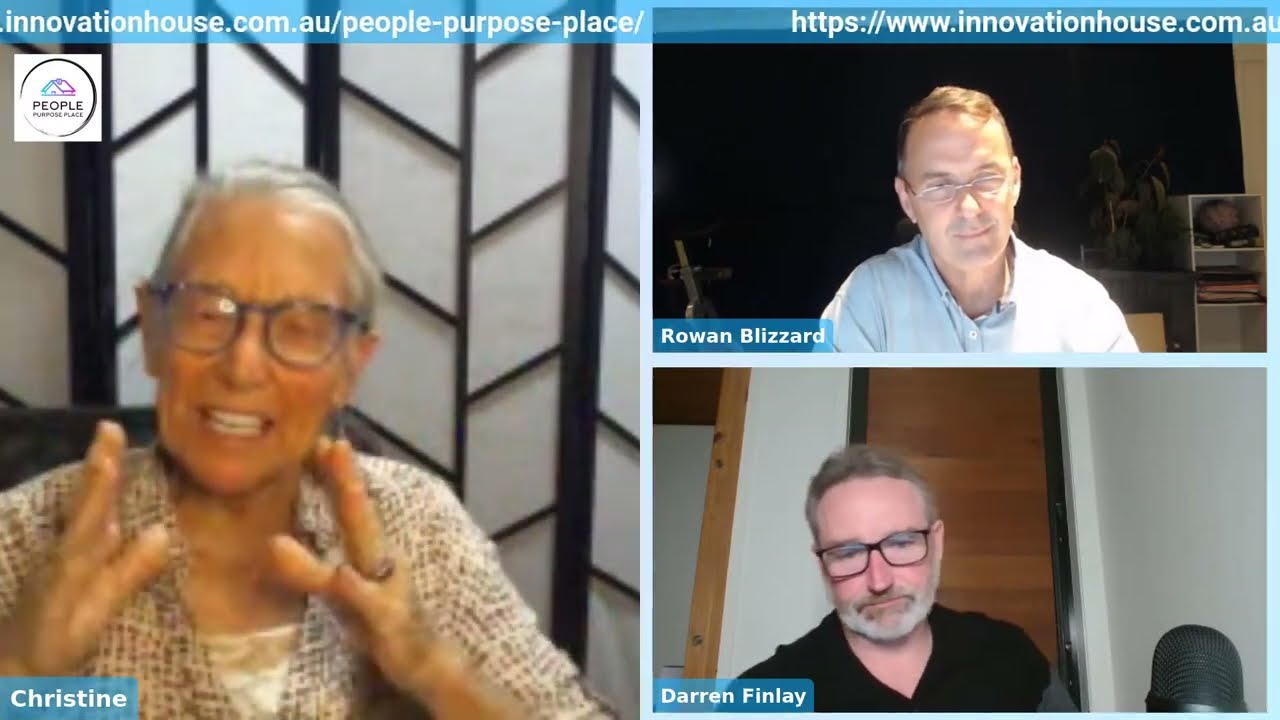
At People Purpose Place, we're solving the housing crisis one intentional household at a time. Discover some of our plans and examples in our PLACE discussion here.

  • People
    • Who Are You
      • Ethical Investor
      • Community Worker
      • Community Elder
      • Young Professional
      • Facilitator
    • Ambassadors
      • Jenny Sader Ambassador
      • Darren Finlay Ambassador
      • Rowan Blizzard Ambassador
  • Purpose
  • Place
    • Places
      • Ginn Road
    • Projects
      • Rifle Range Road
    • Regions
      • Far North Queensland
    • Connected Projects
      • Connected Project: On Natures Edge Flat Pack House
    • Case Studies
      • 11th Avenue Small Lot
      • Renovating and Improving
      • Granny Flat
      • 70 Square meter
      • Multi-Generational
      • Pavilion Home
      • Existing House – Atherton
  • About
    • Events
    • Becoming a Registered Charity
    • Darren Finlay
    • Christine Doan
    • Russell Lowry
    • Rowan Blizzard
    • Privacy Policy
  • Start Here
    • How We Help
      • Form Groups
      • Design Solutions
      • Deliver Projects
      • Support Long-Term
    • FAQ ORIG
    • Media Releases
    • Flyers
    • Featured Coverage
    • Toolbox
    • Workshops
    • Reference Page
    • Podcasts and Video Content
  • Contact
  • Blog
    • Media Releases
    • All Blog Posts

Darren Finlay

Lessons from the Community Development Conference in Port Douglas: Housing, Connection, and Collaboration

26 October 2025 Leave a Comment

When Andrea and our team at PeoplePurposePlace learned the Community Development Conference was coming to Port Douglas in 2025, we knew we had to be there. I didn’t realise how much this conference would change my understanding of our work and the challenges we’re facing.

Darren at the Port Douglas Community Development Conference

A Remarkable Connection

Listening to Dr Alan Dale’s opening address and hearing from Community Development Queensland facilitators and core groups, something clicked. I’d been working alongside community development professionals for some time – sometimes unknowingly. Conversations with purpose-driven individuals exploring co-living and collaborative living solutions were part of a larger movement.

What struck me most was learning about the often-underappreciated role these groups play in keeping our communities functioning and connected. While community centres are the most visible face of this work, the impact goes deeper. Community development professionals support personal growth, social connections, and business development, tailoring their approaches to local communities – what they call “place-based responses.”

Change of Plans

After hearing the keynote speakers and learning more about community development work, I realised I needed to rethink my presentation entirely. The housing pressures across Australia aren’t just a housing issue—they’re fundamentally affecting the survival and wellbeing of local communities. This was larger than I’d initially understood.

I decided to focus on three areas where our work at PeoplePurposePlace intersects with community development:

1. Housing and Wellbeing

The housing crisis has grown beyond individual influence, and its impacts are enormous. Without addressing housing as a human right, supporting community well-being at the local level becomes incredibly difficult. We can’t separate where people live from how well they thrive.

2. The Challenge of Approaching Things Differently

There’s a significant gap between recognising we have a housing problem and actually being willing to change it. Change often means stepping outside our comfort zones, which is difficult within the limits of normal human experience and community expectations.

I wanted to share some approaches we’ve been experimenting with, while being honest that we’re constantly grappling with this. We’re still learning how to help communities move toward collaborative living as a housing solution and a remedy for our connection and wellbeing crisis.

3. What Modern Collaboration Looks Like

We’re no longer entirely dependent on others for survival, but at heart, we’re still small tribal animals. Human connection remains essential for our development and well-being. How do we create that in a modern setting, especially when most people want quick fixes?

This is the question we’re dealing with.

Finding Common Ground

The post-presentation conversations have been enlightening. While housing and community development come from different angles, we face similar challenges and work toward common goals. The lessons learned at PeoplePurposePlace—often through trial and error—resonate in community development. The workshops and processes we’re developing can be adapted in many ways.

I’ve connected with several aligned groups, and I’m excited about building these long-term relationships. There’s something powerful about discovering you’re not alone in tackling these challenges: that there’s a network of people thinking creatively about building stronger, more connected, and resilient communities.

Looking Forward

The Port Douglas conference reminded me that solving complex problems like housing and community wellbeing requires collaboration, innovation, and a willingness to challenge the norms. Most importantly, it requires understanding that housing, connection, and community aren’t separate issues—they’re all part of the same conversation about creating spaces where people can truly thrive.

If you’re interested in community development work in Queensland, check out Community Development Queensland. If you’re exploring collaborative living solutions or reimagining 21st-century community, let’s continue the discussion.

Filed Under: Education

People Purpose Place and Experts in Social Development

18 July 2024 Leave a Comment

YouTube player

What comes to mind when you hear the word “developer”?

The word “developer” can have a bit of a dual-edged sword connotation. On one hand, there’s an aspirational aspect to developers being the ones who take big risks to make things happen that otherwise wouldn’t. They’re the ones driving the creation of new projects and developments. However, there’s also a perception of developers as being more focused on profit and taking advantage of consumers, with shiny shoes and questionable practices. The word “developer” seems to come with a mix of positive and negative associations. Is it possible social development can be done well?

What do you think are the key elements of “Social Development done well”?

social development done well

If social Development is done well, it needs to go beyond just focusing on physical accommodation and consider a community’s human needs and social fabric. The current model of development is often too narrowly focused on increasing density and maximizing profits without enough consideration for what will make the residents happy and create a thriving community.

Some key elements of Social Development done well include:

  • Involve future residents in the planning and design process so their needs and desires are incorporated from the start.
  • Enabling group purchasing and collaborative decision-making can unlock access to higher-quality, more sustainable, and more affordable housing options.
  • Fostering a sense of community and shared ownership, such as through communal garden spaces or other shared amenities.
  • Considering the needs of vulnerable populations like the elderly or domestic violence survivors, and designing solutions that provide stability and support.
  • Engaging with the local council and community to ensure buy-in and a shared vision, rather than just pushing through developments.

How can developers play a role in “Social Development done well”?

Developers have a unique opportunity to contribute to the solution for Social Development done well. Rather than focusing on maximizing profits through standard development models, developers who are driven by a social purpose can partner with future residents and the local community to create housing solutions that meet both financial and human needs.

Some ways developers can contribute to Social Development done well include:

  • Exploring alternative ownership and financing models like rent-to-buy or long-term leases can provide more stability and affordability for residents.
  • Engaging with future residents during the planning and design process ensures the development meets their needs and desires.
  • Leveraging group purchasing power to deliver higher-quality, more sustainable, and more affordable housing options.
  • Working collaboratively with local councils to navigate regulations and gain community buy-in rather than just pushing through standard developments.
  • Prioritizing social and environmental outcomes alongside financial returns, and being transparent about their ESG (environmental, social, and governance) goals.

What are the potential benefits of “Social Development done well” for individuals and communities?

social development done well

The potential benefits of Social Development done well are significant, both for individuals and communities. At the individual level, it can provide housing stability, security, and a sense of community that reduces stress and allows people to thrive. This can have a ripple effect, leading to stronger families, better mental and physical health, and more engaged citizens.

Social Development done well for communities can help retain valuable local knowledge and wisdom. One example it to retain elders in rural areas and the access to their wisdom and experience. It can also foster a greater sense of community connection and social fabric. We all want a sense of belonging and fitting in, where people feel connection with their neighbourhood. This can lead to reduced antisocial behaviour, more volunteerism and civic engagement, and overall higher quality of life.

Ultimately, Social Development done well prioritizes people and their needs, not just physical buildings. Developers and local councils can create living environments that enhance human well-being and social cohesion by taking a more holistic, community-focused approach.

Return to People Purpose Place home

Filed Under: Place

Integral Housing: Embracing the Collective and Individual Journey

11 July 2024 Leave a Comment

YouTube player

Exploring the Foundations of Integral Theory

Integral Theory, pioneered by renowned philosopher Ken Wilber, offers a comprehensive framework for understanding the evolution of human consciousness and development. This powerful approach recognizes that individuals and societies progress through distinct stages, each with unique perspectives and priorities.

At the core of Integral Theory lies the recognition that we must transcend and include the previous stages of our development. We cannot simply discard the archaic, mythic, or tribal aspects of our being. Still, we must instead integrate them into a more expansive, inclusive understanding of ourselves and the world around us.

The Spiral of Human Development

According to Integral Theory, human development follows a spiral trajectory, moving from the collective to the individual. We begin in an archaic, survival-focused state, then progress through mythic, tribal, and traditional stages, eventually reaching the modern and postmodern phases of development.

However, the journey does not end there. Integral Theory posits that there is a further, more inclusive stage beyond postmodernism – the integral stage. This level of development encompasses the previous stages, transcending and including them in a holistic, interconnected view of the self, the community, and the world.

Applying Integral Principles to Housing

Regarding housing and homing, Integral Theory offers a profound and transformative perspective. Rather than focusing solely on the physical structures or financial aspects of housing, Integral Housing seeks to address the deeper human needs and developmental stages that shape our relationship with our living spaces.

At the individual level, Integral Housing recognizes that each person is on a unique journey of growth and self-actualization. It acknowledges that we must transcend and include our previous stages of development, from the basic needs of shelter and safety to the higher-level desires for connection, community, and self-expression.

The Power of Collective Homing

However, integral housing is not just about the individual. It also recognizes the importance of the collective experience and the ways in which we come together to create shared living spaces that reflect our collective values, needs, and aspirations.

By embracing the principles of Integral Theory, Integral Housing seeks to foster environments that nurture the growth and development of both the individual and the community. It aims to create spaces that are not just functional but also inspire a sense of belonging, connection, and mutual support.

Navigating the Challenges of Integral Homing

Implementing Integral Housing is not without its challenges. Bringing together individuals at various stages of development with diverse needs and perspectives requires a delicate balance of understanding, empathy, and a willingness to transcend and include.

However, the rewards of this approach are profound. By creating housing that reflects the full spectrum of human development, we have the opportunity to cultivate environments that nourish the body, mind, and spirit—not just for the individuals who inhabit them but also for the broader community.

Embracing the Journey Ahead

As we continue to explore the concept of Integral Housing, we must remain open to its complexities and nuances. It is not a one-size-fits-all solution but rather a dynamic, evolving framework that must be tailored to each community’s unique needs and circumstances.

By embracing the principles of Integral Theory and applying them to housing and homing, we have the opportunity to create living spaces that truly nourish the human spirit, fostering connection, growth, and a sense of belonging that transcends the physical structures themselves.

The journey ahead may be challenging, but it is also filled with the promise of a more holistic, inclusive, and fulfilling approach to living, connecting, and thriving together.

People Purpose Place home

Filed Under: Education, Purpose

Australia needs a better housing system

30 May 2024 Leave a Comment

Source: National Housing Supply and Affordability Council

Darren Finlay

Our view of this reporting

Over decades we have reviewed any number of industry, government and academic reporting often there are solid points of agreement contained within. In principle these reports are commissioned with good intentions and the authors are skilled and diligent in their task.

Often our view is that there are gaps of what is not discussed or considered in these reports that should be debated in our wider public. Feel free to start here as we review the options looking forward as identified in this report.

Australia needs a better housing system I wholeheartedly agree!

Imagine how good our community could be if we were enabled to not only shelter in these 11 million structures but they were designed and matched to our needs to intentionally allowing each of us to thrive!

Rowan Blizzard

Looking forward what options are there?

This chapter outlines 10 areas that could improve the state of the housing system. These require collective effort and coordination across all levels of government, the private sector, the community housing sector and the broader Australian community.

Source: National Housing Supply and Affordability Council

Broadly speaking these are probably not very controversial but we have some cheeky suggestions for a wider discussion: –

  • Investing in social housing
  • Reducing homelessness
  • Improving rental market outcomes for tenants
  • Improving efficiency in the land use and planning systems
  • Boosting capacity in the construction sector
  • Improving data availability
  • Addressing regional-specific housing challenges
  • Enhancing First Nations housing outcomes
  • Reviewing the suitability of the national housing target
  • Ensuring Australia’s taxation system supports supply and affordability

While these individually might be a handy list of future blogs we will review in brief here to start the ball rolling.

Investing in social housing

better housing system

Sounds like we have furious agreement across our community on this one. One small caveat though “not in my backyard”. With our history of high density low socioeconomic housing being poorly supported there are reasonable grounds for local communities to be hesitant. Social and affordable housing can and should be done with the necessary skill and support such that it becomes a seamless integration in our overall housing market rather than being treated as an “other” housing type. When we make exceptions for “other” types to be delivered we are setting ourselves up for problems.

Reducing homelessness

Not controversial but we should ask some more questions.

What is an acceptable level of homelessness?

Or

Perhaps a reasonable expectation is that when homelessness occurs that is is brief and not a repeating pattern for those experiencing it.

Improving rental market outcomes for tenants

better housing system

We have a belief that 3, 5 or 10 year tenure can be provided to tenants that offers the necessary checks and balances for both sides of the equation. Landlords need a sufficient and reasonable return on their investment. At the same time the tenants need some predictability and security in the costs of their housing.

For a better housing system at the very least we need more options than the current house or apartment offer. See some of our historical case studies here.

Improving efficiency in the land use and planning systems

better housing system

With 6 States and a couple of territories and 14 houses of parliament for our meagre population of 26million we suspect that these statements are well intentioned and great ideals. In reality we suspect that these are unlikely to actually achieve any level of efficiency or consistency across the country.

Boosting capacity in the construction sector

How do we discuss dirty, dusty, dangerous outdoor work with the youth of today?

How do we actually convince imported skills and labour to continue in our inefficient and wasteful construction sector. Often these same employment candidates will find that are more attractive jobs in our modern economy. Because a migrant has entered the country with a skill in demand often these trade skills can be attractive to remote fly-in fly-out sites where their skills are put to use for a multi-national company. We cannot fault a new entrant from maximising their pay packet but this still ends up not expanding our housing supply.

Improving data availability

better housing system

In the 2018 Royal Commission into Aged Care there were some startling findings around some very fundamental questions.

How much does government spend on aged care?

Apparently this could not be answered in the Royal Commission and some of the suggestions to come out of this system interrogation was to get better data. How is that coming along?

Yes improving data availability sounds like a good idea however I would suggest it is not the main game. Issues that demand attention are plentiful without getting too bogged down into further analysis.

Addressing regional-specific housing challenges

better housing system

For housing we have some dramatic issues in our two tiered system. Metropolitan communities seem to do reasonable well. Perhaps this is because our representative political system means that they do have all the political sway. In the regions our communities suffer may inequities. Perhaps we should even be asking some probing questions.

Should the access to housing, hospitals, transport and communication be equal across all of our great country?

Or

Do our country cousins deserve lesser services as a cost of living in the regions?

Enhancing First Nations housing outcomes

better housing system

Our first nations communities are doing worse than average on every metric that we can measure. In our “first world” country some of these inequities are truly astounding. Poor outcomes include:-

  • Education opportunities
  • Health outcomes
  • Interaction with the justice system

These negative outcomes will be improved with intentional fit for purpose housing. It seems that when we engage with our first nations communities we still persist with applying our housing thinking to their situation. This seems to be quite contrary to these communities experience of living in sync with the country and environment rather than our typical response of building incompatible boxes.

For a better housing system we could learn much from our First Nations examples.

Reviewing the suitability of the national housing target

better housing system

Targets are great for sure and they help to provide some direction. None of these big picture targets have been met, or even benchmarked, in delivery. When we review the National Rental Affordability Scheme (NRAS) or perhaps the Northern Territory Intervention (Northern Territory National Emergency Response, also known as “The Intervention“) how did we go against the stated goals or targets. We understand that plans are almost never delivered at 100% as circumstances (it’s called life) changes along the way.

An example of the reporting on the “Failed” Northern Territory Intervention after the event can be found here.

Ensuring Australia’s taxation system supports supply and affordability

better housing system

With a 5 year projection this is tricky. With our human bias for the negative we provide any opposition has a free kick. In our popularist system of government candidates generally run a mile when the word “TAX” is mentioned. I have no fear of being voted in our out! You are most welcome to debate my views.

This report makes no mention of the fact that our established housing system is taking up to 40% in fees taxes and charges for all new housing delivery.

Across the states and territories we have found the costs of fees, taxes and charges involved in new house supply and delivery.

Housing Industry Australia

Perhaps there is some room in our existing tax system to revisit the current settings.

Return to People Purpose Place home.

Filed Under: Education Tagged With: #housingcrisis, #housingforall

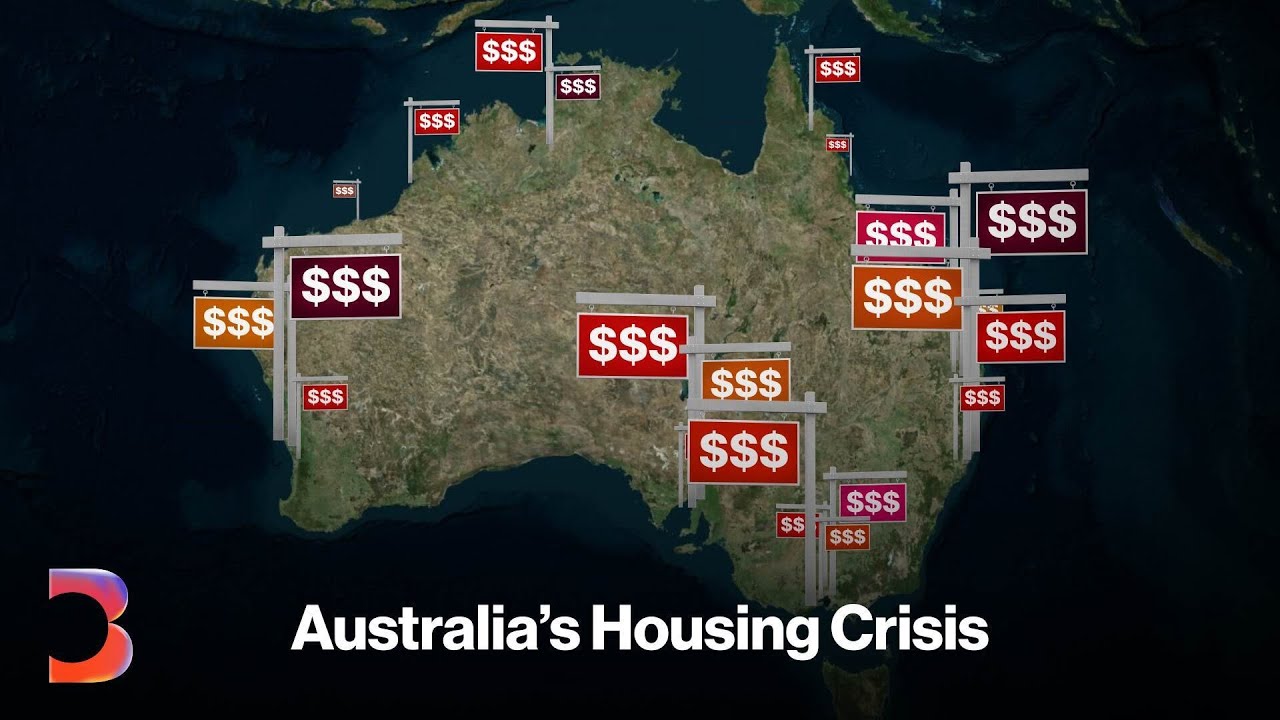
The Housing Crunch in Australia

22 May 2024 Leave a Comment

Challenges for Buyers, Sellers, and the Government

YouTube player
Bloomberg Originals https://www.youtube.com/@business

A Popular House with a Dark History

As an example of current property: Property inspection

Apparently, a hundred years ago, there were witches that lived here, but that hasn’t stopped it from being one of the most popular houses this year. There’s a huge hole as you walk in the front of the house, but we put a bit of plywood there, and we’re still recommending that people step over that if they can. Some of these houses are in such bad condition that we must get people to sign waivers to understand what they’re walking into. We’ve had over a thousand inquiries online, shown about 60 people through the home and sent out 30 contracts. With the market feedback, prices have been between 1.3 and 1.4 million, making it a great raw site for someone looking to renovate.

The Sydney Housing Market: A Bellwether of Property Prices

Alarms are going off in Sydney, known as Australia’s Bellwether Property Market. The coastal city ranks as the second least affordable housing market in the world among 94 major cities. This rush is very overwhelming; there’s not enough supply, and there’s too much demand

I’ve been selling in the area for the last 18 years. The Sydney Market is the strongest in Australia, and that has to do with the beaches and the accessibility to the City airports. It’s a fantastic location with a huge lifestyle scene, and I think it has the highest growing population out of all the Australian cities, and that’s always going to cause prices to go up. When land and homes are scarce, the toughest Market I’m finding for buyers is the low-income first-home buyers, who often look at one- or two-bedroom apartments. As you can imagine, when rates go up from two per cent to six per cent, that’s huge for someone on a single-income salary looking to buy their first home.

Ercan Ersan

The Housing Crunch in Australia: Causes and Consequences

The predicament is mirrored globally, from the UK to Singapore, with little to no signs of relief. So what’s driving this housing crunch, and what are the consequences for buyers, sellers, construction firms, and the government?

National home prices in Australia have risen 33% since the onset of the pandemic. At the same time, interest rates are markedly higher. Now, we’re seeing that because we’ve got very tight conditions with respect to the supply of stock on the market. We’ve also got the unemployment rate which is sitting around a multi-decade low, adding an additional sense of security for home buyers. So we’re continuing to see that housing demand has been bolstered by a strong rebound in net migration. The population of Greater Sydney is expected to grow by 1 million by 2041 to 6.1 million people. To cope with that influx, the state needs about 900,000 additional dwellings by then, according to government estimates. But the tight supply of homes for sale isn’t the only problem.

The Rental Market Crisis

Rental markets in Australia are incredibly challenged at the moment. We’ve got vacancy rates at or close to record lows in most Capital Cities Australia-wide. We’ve got a very strong demand for rent, which continues to outstrip the supply of available rentals. Less than one per cent of the country’s rental properties are available for occupancy, which is the lowest among comparable markets globally. The tight supply partly explains why house and apartment rent surged by 16% and 20% in the past year alone.

The Affordability Challenges for the Younger Generation

When we look at the affordability challenges that the housing market presents in Australia, we see that the younger generation of Australians are most impacted by these challenges, and also amongst those on lower income. 23-year-old Harry and his mother live on the outskirts of Sydney. Harry is a student with a part-time job with a two-hour commute each way. They’re bearing the brunt of the housing crisis, having been left with no choice but to move from house to house to house. Harry says, “The house we were put in previously, I think we started renting it for 470 or 500 a week. It rose to 550. We couldn’t keep up with the cost. My mum is a Catholic Primary School teacher. She’s lived in the area for 20-something plus years, and she can’t afford to live in the same area that she’s lived in.” Harry says they were evicted from their rental house in 2022 when they asked for repairs to the shower.

The Major Disruption of Your Life Housing Crunch

And then suddenly, they’ve just had to drop everything and spend all of their time looking for rental properties, just inspection after inspection, and applying for properties and not hearing anything back. One of the inspections they went to in a nearby suburb, they got there, and around 85 people counted. You don’t stand a chance when there are that many people going. It’s the same with the pitch. It’s kind of like, “Wow, you know, let me do a resume for my dog.”

The Challenges of Building More Homes

Hurdles remain for building more homes to ease the housing crunch. In the background, the construction collapses, with firms going bankrupt in the dozens. A pandemic-driven building boom is partly to blame. Construction firms had agreed to fix-price contracts with lockdown homeowners looking to fix up their properties. But then the cost of labor and building materials spiked along with inflation. According to the Builders Collective of Australia, houses are now 30% more expensive to build than before the pandemic. For some, any relief can’t come soon enough.

Incentivizing Social and Affordable Housing

One way to help alleviate the housing crunch in the Australian housing market is by incentivizing or increasing the supply of social and affordable housing for a portion of housing market participants that are so often overlooked and for whom it is crucial to be able to access stable and secure housing tenure. Across Australia, housing supply and housing affordability are a challenge. We are looking at opportunities to provide greater densification. We’re looking at providing more planning pathways for different types of housing typologies. Firstly, increasing the social housing stock.

“Where you live, it’s not just a roof over your head. It’s:-

  • community,
  • Where you build your family,
  • Where you build your networks,
  • How you get to know people,
  • Your sense of self.

We’ve recently received 610 million dollars from the Commonwealth government that will be directly put into social housing. The government contributes to social housing in the hundreds of hundreds of millions each year to ensure that we reinvest in both new and improved social housing stock. At the moment, every single aspect of renting in this country is centred around profit. The home is such an indescribable thing, and realistically you might not even get the privilege to own your own home at all.”

Summing it up

The housing crunch in Australia is a complex issue that has various contributing factors. The demand for homes and limited supply have increased prices and made it increasingly difficult for many Australians, particularly the younger generation and those on lower incomes, to afford suitable housing. The rental market is also experiencing a crisis, with incredibly low vacancy rates and soaring rental prices. Additionally, the challenges faced by construction firms in building more homes further exacerbate the situation.

To address these challenges, there is a need for increased investment in social and affordable housing and initiatives to incentivize the construction of new homes. By providing stable and secure housing options for all Australians, regardless of their income level, we can work towards creating a more equitable and sustainable housing market.

People Purpose Place home

Filed Under: Place Tagged With: #housingforall

What Do Humans Want from Their Housing?

26 September 2022 Leave a Comment

YouTube player

Introduction

Welcome to a different format tonight. We have a special guest, Colby Finlay, joining us to provide a unique perspective on what humans want from their housing. Colby, a student at James Cook University, brings his insights as someone navigating the challenges of studying while also looking for suitable housing. In this episode, we will discuss humans’ different perspectives on housing and explore the distinction between wants and needs. Human housing is really not that difficult.

What Part of a Home is Important?

Before discussing what humans want from their housing, we start with a check-in question: What part of a home do you think is important? Colby shares his perspective, highlighting the kitchen as the most important part since it brings family and friends together. The host also mentions the significance of the bedroom as a personal sanctuary. Both perspectives emphasize the role different areas of a home play in meeting individual human housing needs.

Colby’s Unique Perspective

As a geology major at James Cook University, Colby shares his academic pursuits and interest in studying the interactions between animals and their environment. He explains the difference between biology and ecology, with ecology focusing specifically on the study of animals in their environment. This perspective adds depth to the conversation as we explore the relationship between housing and the natural world.

Colby’s Current Housing Solution

Colby reveals that he is living with the podcast host, which provides him with a cost-effective solution and the comfort of living in a familiar environment. He explains that many students live with their families or in shared accommodations to avoid the financial burden of renting on their own. Colby highlights the benefit of not worrying about housing expenses, allowing him to focus on his studies.

Exploring the Wants and Needs of Humans in Housing

The episode’s main focus is to understand what humans want from their housing. The host suggests interviewing different individuals to gain insights into their unique living contexts and how these impact their housing preferences. The discussion emphasizes the difference between wants and needs regarding housing.

Colby’s Perspective on Wants and Needs

Colby shares his thoughts on the topic, highlighting the distinction between wants and needs regarding housing. He acknowledges that while money is not an issue, many people would want larger houses with luxurious features. However, he personally believes that having the essentials and a few desired features is sufficient. Colby emphasizes the importance of being realistic about wants and urges individuals to question whether their desired features are necessary or driven by societal expectations.

The Minimum Requirements for Housing

Regarding minimum housing requirements, Colby believes that having a place to sleep, a kitchen to cook meals, and stable living conditions are essential. However, he acknowledges that the concept of minimum requirements can vary depending on an individual’s circumstances. Colby also highlights the importance of access to clean water and basic amenities, which may be taken for granted in some parts of the world but are considered luxuries in others.

Living in Share Homes

Colby shares insights into his friends’ living arrangements, which include shared homes and rental properties. He mentions that some friends have bought their own units, while others live in shared houses. Living in shared homes often depends on individual preferences and financial considerations. Colby points out that while living in shared homes may initially be challenging, and it can also foster a sense of community and lead to new friendships.

Dealing with Conflict in Share Homes

When it comes to dealing with conflict in shared homes, Colby explains that open communication and understanding are crucial. He shares that it is essential for individuals to be aware of their surroundings and mindful of their roommates’ needs and boundaries. Colby notes that conflicts can arise when individuals fail to clean up after themselves or respect shared spaces. However, he believes that most conflicts can be resolved through open dialogue and a willingness to take responsibility for one’s actions.

Shared Responsibilities and Routines

Colby discusses how shared responsibilities are usually informally agreed upon in shared homes. Individuals tend to develop routines and patterns based on their schedules and needs. For example, if someone consistently showers at a specific time, others in the house may adjust their routines accordingly. Colby emphasizes the importance of being considerate of others and understanding that compromises sometimes must be made. Great human relations will suit the human housing solution.

Challenges in Finding Suitable Accommodation

Colby acknowledges the challenges that students face when searching for suitable housing. He mentions that some landlords may have biases against renting to university students due to perceived financial instability. Colby also notes that real estate agencies can be strict during inspections and may cause additional stress for students. To find solutions for human housing these challenges highlight the need for more student-friendly housing options to ensure students’ smoother and less stressful transition.

The Impact of Housing on Mental Well-being

Colby recognizes the connection between housing and mental well-being. He explains that living in a stressful or unsuitable environment can negatively impact a person’s mental health. Colby emphasizes the importance of being mindful of one’s housing choices and striving for a living environment that promotes well-being. Creating a supportive and comfortable space can promote a healthier and happier lifestyle.

In Summary

In conclusion, exploring what humans want from their housing reveals people’s diverse perspectives and needs. Colby’s insights as a student navigating the challenges of finding suitable housing shed light on the importance of understanding individual requirements and fostering a sense of community in shared homes. By considering the wants and needs of individuals, we can work towards creating housing solutions that prioritize well-being and promote inclusivity.

If you are inspired, the unedited longer-form interview with Colby is available on our YouTube channel here.

People Purpose Place home

Filed Under: People Tagged With: #housingfor all

Footer

People Purpose Place Pty Ltd
ACN: 659 425 242
ABN: 90 659 425 242
Fortitude Valley QLD 4006 hello@peoplepurposeplace.com.au
ACNC Registered Charity Logo
  • Facebook
  • Instagram
  • YouTube

Copyright © 2026 · Original Website by Boldacious Digital