• Skip to main content
  • Skip to footer

People Purpose Place

At People Purpose Place, we're solving the housing crisis one intentional household at a time. Discover some of our plans and examples in our PLACE discussion here.

  • People
    • Who Are You
      • Ethical Investor
      • Community Worker
      • Community Elder
      • Young Professional
      • Facilitator
    • Ambassadors
      • Jenny Sader Ambassador
      • Darren Finlay Ambassador
      • Rowan Blizzard Ambassador
  • Purpose
  • Place
    • Places
      • Ginn Road
    • Projects
      • Rifle Range Road
    • Regions
      • Far North Queensland
    • Connected Projects
      • Connected Project: On Natures Edge Flat Pack House
    • Case Studies
      • 11th Avenue Small Lot
      • Renovating and Improving
      • Granny Flat
      • 70 Square meter
      • Multi-Generational
      • Pavilion Home
      • Existing House – Atherton
  • About
    • Events
    • Becoming a Registered Charity
    • Darren Finlay
    • Christine Doan
    • Russell Lowry
    • Rowan Blizzard
    • Privacy Policy
  • Start Here
    • How We Help
      • Form Groups
      • Design Solutions
      • Deliver Projects
      • Support Long-Term
    • FAQ ORIG
    • Media Releases
    • Flyers
    • Featured Coverage
    • Toolbox
    • Workshops
    • Reference Page
    • Podcasts and Video Content
  • Contact
  • Blog
    • Media Releases
    • All Blog Posts

Archives for July 2024

Tablelands Region: Local Housing Action Plan 2024-2029

25 July 2024 Leave a Comment

The Tablelands Regional Council recently issues a Media Release about their plan for more housing. You can review the full Tablelands Local Housing Action Plan

Focus area 1

Increasing housing supply and diversity.

As evidenced by the past 40 decades of housing production, there is no successful mechanism for substantially increasing housing diversity. This is a failure of a housing action plan if there is no mechanism that can address this aspirational goal.

The primary barrier is that the big four banks need similar housing valuations. This drives the whole housing market to produce the same stock as all the comparisons.

TRC Opportunities

  • Provide ongoing monitoring of housing supply, needs and trends.
  • Investigate statutory and non-statutory levers and incentives to support the delivery of increased density housing, (e.g. planning scheme and Local Government Infrastructure Plan (LGIP) review).
  • Investigate statutory and non-statutory levers and incentives to support the delivery of increased density housing, (e.g. planning scheme and Local Government Infrastructure Plan (LGIP) review).
  • Support construction and manufacturing industry development to encourage the  affordable and timely delivery of housing (e.g. provide incentives for delivering smaller housing product).
  • Investigate approaches to address high construction costs.
  • Review housing grant and incentive opportunities and conditions to ensure the delivery of more housing.
  • Provide information to the community on housing needs and development opportunities.

Focus area 2

Housing for people in need, Social housing, Affordable housing, First nations housing and Housing to meet ageing population.

TRC Opportunities

  • Divest the TRC-owned housing stock and provide to local community housing providers.
  • Advocate that the social housing process is reviewed and encourage local people to be housed.
  • Support the delivery of affordable housing as a part of large-scale housing developments.
  • Strengthen relationships with between housing providers, First Nations housing.

Focus area 3

Building  the capacity of the homelessness sector.

(Not sure how this is different from Focus area 2.)

TRC Opportunities

  • Increase understanding about the current homelessness service landscape and capacity.
  • Develop an appropriate crisis accommodation model for the regional and rural Queensland context.

Focus area 4

Housing for the local workforce

TRC Opportunities

  • Undertake research and develop a strategy to manage workforce development growth.
  • Workforce accommodation consideration for major projects in the Tablelands region.
  • Deliver housing to support (State) government employees as part of associated developments.
  • Explore new and emerging models for housing delivery.

While we have every support for this type of discussion and planning of a local housing action plan. It seems that many of these points for action would fall under the category of business as usual. The action item “Provide ongoing monitoring of housing supply, needs and trends.” would appear to be a most obvious statement of this business as usual. Given we are talking about the greatest need for all of this council constituents (cost of living relief, or reduction in housing stress) it would appear that it should be expected that the local governing authority already has a grasp of the housing needs and trends. If you wanted to get an update without the beautiful graphics and micro details included (see below) then the 6’O’Clock news should suffice any night of the week.

Often quoted as the definition of insanity is: –

“Taking the same actions and expecting a different result”

Our proposal for local councils is this:

For no additional cost to what you are currently doing in this space there are answers to each of these needs with our framework and coaching.

Return to People Purpose Place home

Filed Under: Education Tagged With: #housingcrisis, #housingforall

People Purpose Place and Experts in Social Development

18 July 2024 Leave a Comment

YouTube player

What comes to mind when you hear the word “developer”?

The word “developer” can have a bit of a dual-edged sword connotation. On one hand, there’s an aspirational aspect to developers being the ones who take big risks to make things happen that otherwise wouldn’t. They’re the ones driving the creation of new projects and developments. However, there’s also a perception of developers as being more focused on profit and taking advantage of consumers, with shiny shoes and questionable practices. The word “developer” seems to come with a mix of positive and negative associations. Is it possible social development can be done well?

What do you think are the key elements of “Social Development done well”?

social development done well

If social Development is done well, it needs to go beyond just focusing on physical accommodation and consider a community’s human needs and social fabric. The current model of development is often too narrowly focused on increasing density and maximizing profits without enough consideration for what will make the residents happy and create a thriving community.

Some key elements of Social Development done well include:

  • Involve future residents in the planning and design process so their needs and desires are incorporated from the start.
  • Enabling group purchasing and collaborative decision-making can unlock access to higher-quality, more sustainable, and more affordable housing options.
  • Fostering a sense of community and shared ownership, such as through communal garden spaces or other shared amenities.
  • Considering the needs of vulnerable populations like the elderly or domestic violence survivors, and designing solutions that provide stability and support.
  • Engaging with the local council and community to ensure buy-in and a shared vision, rather than just pushing through developments.

How can developers play a role in “Social Development done well”?

Developers have a unique opportunity to contribute to the solution for Social Development done well. Rather than focusing on maximizing profits through standard development models, developers who are driven by a social purpose can partner with future residents and the local community to create housing solutions that meet both financial and human needs.

Some ways developers can contribute to Social Development done well include:

  • Exploring alternative ownership and financing models like rent-to-buy or long-term leases can provide more stability and affordability for residents.
  • Engaging with future residents during the planning and design process ensures the development meets their needs and desires.
  • Leveraging group purchasing power to deliver higher-quality, more sustainable, and more affordable housing options.
  • Working collaboratively with local councils to navigate regulations and gain community buy-in rather than just pushing through standard developments.
  • Prioritizing social and environmental outcomes alongside financial returns, and being transparent about their ESG (environmental, social, and governance) goals.

What are the potential benefits of “Social Development done well” for individuals and communities?

social development done well

The potential benefits of Social Development done well are significant, both for individuals and communities. At the individual level, it can provide housing stability, security, and a sense of community that reduces stress and allows people to thrive. This can have a ripple effect, leading to stronger families, better mental and physical health, and more engaged citizens.

Social Development done well for communities can help retain valuable local knowledge and wisdom. One example it to retain elders in rural areas and the access to their wisdom and experience. It can also foster a greater sense of community connection and social fabric. We all want a sense of belonging and fitting in, where people feel connection with their neighbourhood. This can lead to reduced antisocial behaviour, more volunteerism and civic engagement, and overall higher quality of life.

Ultimately, Social Development done well prioritizes people and their needs, not just physical buildings. Developers and local councils can create living environments that enhance human well-being and social cohesion by taking a more holistic, community-focused approach.

Return to People Purpose Place home

Filed Under: Place

Integral Housing: Embracing the Collective and Individual Journey

11 July 2024 Leave a Comment

YouTube player

Exploring the Foundations of Integral Theory

Integral Theory, pioneered by renowned philosopher Ken Wilber, offers a comprehensive framework for understanding the evolution of human consciousness and development. This powerful approach recognizes that individuals and societies progress through distinct stages, each with unique perspectives and priorities.

At the core of Integral Theory lies the recognition that we must transcend and include the previous stages of our development. We cannot simply discard the archaic, mythic, or tribal aspects of our being. Still, we must instead integrate them into a more expansive, inclusive understanding of ourselves and the world around us.

The Spiral of Human Development

According to Integral Theory, human development follows a spiral trajectory, moving from the collective to the individual. We begin in an archaic, survival-focused state, then progress through mythic, tribal, and traditional stages, eventually reaching the modern and postmodern phases of development.

However, the journey does not end there. Integral Theory posits that there is a further, more inclusive stage beyond postmodernism – the integral stage. This level of development encompasses the previous stages, transcending and including them in a holistic, interconnected view of the self, the community, and the world.

Applying Integral Principles to Housing

Regarding housing and homing, Integral Theory offers a profound and transformative perspective. Rather than focusing solely on the physical structures or financial aspects of housing, Integral Housing seeks to address the deeper human needs and developmental stages that shape our relationship with our living spaces.

At the individual level, Integral Housing recognizes that each person is on a unique journey of growth and self-actualization. It acknowledges that we must transcend and include our previous stages of development, from the basic needs of shelter and safety to the higher-level desires for connection, community, and self-expression.

The Power of Collective Homing

However, integral housing is not just about the individual. It also recognizes the importance of the collective experience and the ways in which we come together to create shared living spaces that reflect our collective values, needs, and aspirations.

By embracing the principles of Integral Theory, Integral Housing seeks to foster environments that nurture the growth and development of both the individual and the community. It aims to create spaces that are not just functional but also inspire a sense of belonging, connection, and mutual support.

Navigating the Challenges of Integral Homing

Implementing Integral Housing is not without its challenges. Bringing together individuals at various stages of development with diverse needs and perspectives requires a delicate balance of understanding, empathy, and a willingness to transcend and include.

However, the rewards of this approach are profound. By creating housing that reflects the full spectrum of human development, we have the opportunity to cultivate environments that nourish the body, mind, and spirit—not just for the individuals who inhabit them but also for the broader community.

Embracing the Journey Ahead

As we continue to explore the concept of Integral Housing, we must remain open to its complexities and nuances. It is not a one-size-fits-all solution but rather a dynamic, evolving framework that must be tailored to each community’s unique needs and circumstances.

By embracing the principles of Integral Theory and applying them to housing and homing, we have the opportunity to create living spaces that truly nourish the human spirit, fostering connection, growth, and a sense of belonging that transcends the physical structures themselves.

The journey ahead may be challenging, but it is also filled with the promise of a more holistic, inclusive, and fulfilling approach to living, connecting, and thriving together.

People Purpose Place home

Filed Under: Education, Purpose

China Investors Leaving Australia as Property Crisis Deepens

4 July 2024 Leave a Comment

YouTube player

The Exodus of Chinese Developers from the Australian Market

If it has been so good for Chinese investors, we have to ask, “Chinese investors leaving”, WHY?

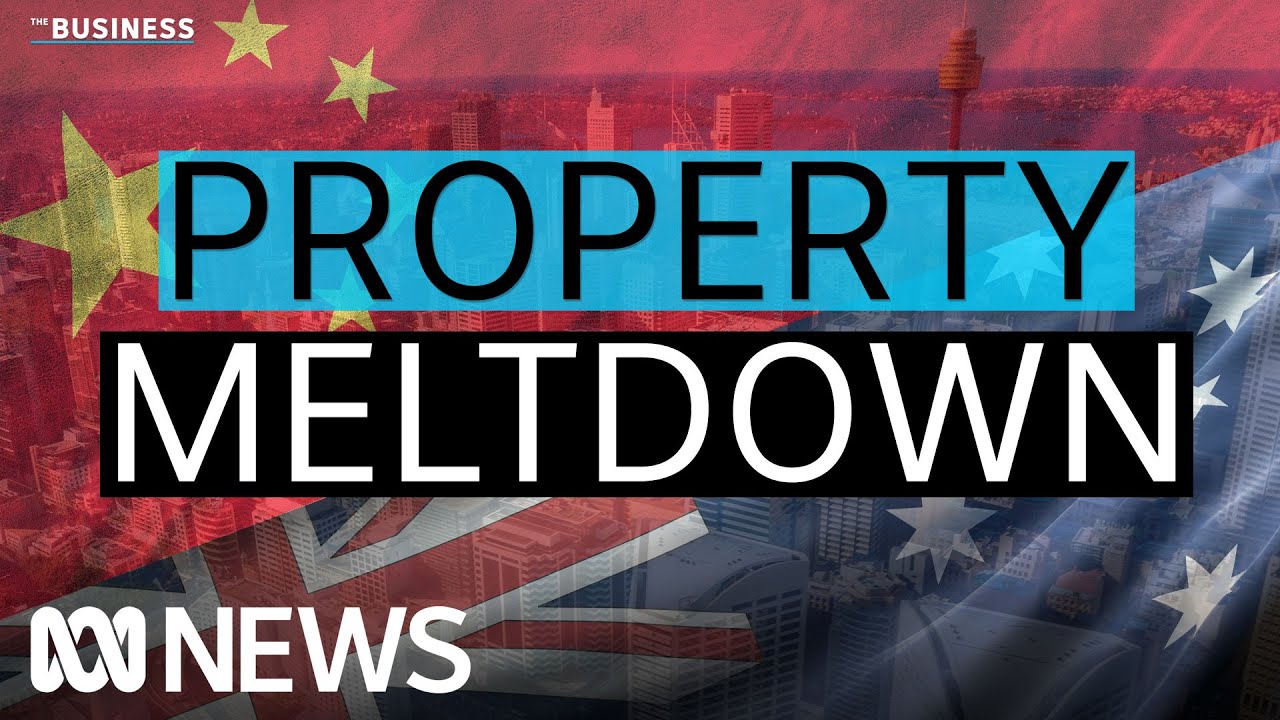
Over the past decade, top Chinese property developers like Country Garden, Greenland, and Wanda have been major Australian real estate market players. They have been snapping up prime development sites nationwide. However, the tides have turned, and these developers are now selling off their Australian assets or downsizing their operations amidst a worsening property crisis in China. The question has to be asked why are Chinese investors leaving?

Chinese investors leaving

According to Mark Weisel, the decision-making process for these Chinese developers has been “very sudden and very quick.” Now (2024) Chinese investors are leaving. Between 2009 and 2016, these Chinese developers amassed over $8 billion in development sites in Australia. However, with the troubles emerging at home, an exodus of these foreign investors from the Australian market has begun.

The Bursting of the Chinese Property Bubble

The Chinese property sector has been a significant driver of the country’s economic growth. Some reports say that this economic activity of property development accounts for more than a quarter of its GDP. However, in recent years, Beijing has introduced measures to crack down on the sector, including limiting the amounts developers can borrow. This has caused the Chinese property bubble to burst. This sector contracting since the second half of 2021 – the longest downtrend since the late 1990s.

The impact of this crisis has been felt by the major Chinese developers. Country Garden, the world’s most indebted property developer, recently posted a record first-half-year loss of $11 billion. This specific developer is at serious risk of default. Greenland, once a major player in the Australian market, has lost more than 99% of its share value.

Chinese investors leaving

The Exodus of Chinese Developers from Australia

As these Chinese developers face a cash crunch at home, they have been selling their Australian assets to raise funds. Greenland has sold a site in Erskine Ville, Sydney, for $350 million,. Country Garden is selling off portions of its Wilton Greens and Windermere Estate projects.

These sales will undoubtedly impact the number of new homes coming to the market. These large capacity Chinese developers have historically been adept at building high-density dwellings, such as apartment towers. Analysts predict that there will be less of these types of developments over the next two to five years.

The Impact on the Australian Economy

The exodus of Chinese investors from the Australian property market is a significant development. Australia has historically been the largest importer of millionaires. The departure of these deep-pocketed investors is likely to have a ripple effect on the Australian economy. The flow on effects will be evident in both in the real estate and construction sectors.

However, the Chinese government has clarified that it wants these developers to turn their focus back to China’s own property sector, which is crucial for the country’s post-pandemic recovery. This shift in priorities will likely continue to impact the Australian market in the coming years.

The Changing Relationship Between Australia and China

The Chinese investors leaving the Australian market also reflects the broader changes in the relationship between the two countries. The covert inquiry, trade sanctions, and sharp exchanges over international security issues, including Taiwan, have strained the bilateral relationship.

However, there are signs that the relationship may be improving, with reports that Chinese President Xi Jinping has decided it’s time to re-engage with Australia. The upcoming visit of Australian Prime Minister Anthony Albanese to Beijing is seen as a potential opportunity to reset the relationship, although there are still risks and challenges that need to be navigated.

What does it all mean?

The exodus of Chinese property developers from the Australian market is significant. This development reflects the broader challenges facing the Chinese property sector. It is reflected in the evolving relationship between Australia and China. As the Chinese developers turn their focus back to their home market, the impact on the Australian economy and real estate sector is likely to be felt in the coming years. However, the potential for a reset in the Australia-China relationship may offer new opportunities for both countries to navigate these changes.

People Purpose Place home

Filed Under: Place Tagged With: #housingbythenumbers

Footer

People Purpose Place Pty Ltd
ACN: 659 425 242
ABN: 90 659 425 242
Fortitude Valley QLD 4006 hello@peoplepurposeplace.com.au
ACNC Registered Charity Logo
  • Facebook
  • Instagram
  • YouTube

Copyright © 2026 · Original Website by Boldacious Digital