• Skip to main content
  • Skip to footer

People Purpose Place

At People Purpose Place, we're solving the housing crisis one intentional household at a time. Discover some of our plans and examples in our PLACE discussion here.

  • People
    • Who Are You
      • Ethical Investor
      • Community Worker
      • Community Elder
      • Young Professional
      • Facilitator
    • Ambassadors
      • Jenny Sader Ambassador
      • Darren Finlay Ambassador
      • Rowan Blizzard Ambassador
  • Purpose
  • Place
    • Places
      • Ginn Road
    • Projects
      • Rifle Range Road
    • Regions
      • Far North Queensland
    • Connected Projects
      • Connected Project: On Natures Edge Flat Pack House
    • Case Studies
      • 11th Avenue Small Lot
      • Renovating and Improving
      • Granny Flat
      • 70 Square meter
      • Multi-Generational
      • Pavilion Home
      • Existing House – Atherton
  • About
    • Events
    • Becoming a Registered Charity
    • Darren Finlay
    • Christine Doan
    • Russell Lowry
    • Rowan Blizzard
    • Privacy Policy
  • Start Here
    • How We Help
      • Form Groups
      • Design Solutions
      • Deliver Projects
      • Support Long-Term
    • FAQ ORIG
    • Media Releases
    • Flyers
    • Featured Coverage
    • Toolbox
    • Workshops
    • Reference Page
    • Podcasts and Video Content
  • Contact
  • Blog
    • Media Releases
    • All Blog Posts

Archives for May 2024

Australia needs a better housing system

30 May 2024 Leave a Comment

Source: National Housing Supply and Affordability Council

Darren Finlay

Our view of this reporting

Over decades we have reviewed any number of industry, government and academic reporting often there are solid points of agreement contained within. In principle these reports are commissioned with good intentions and the authors are skilled and diligent in their task.

Often our view is that there are gaps of what is not discussed or considered in these reports that should be debated in our wider public. Feel free to start here as we review the options looking forward as identified in this report.

Australia needs a better housing system I wholeheartedly agree!

Imagine how good our community could be if we were enabled to not only shelter in these 11 million structures but they were designed and matched to our needs to intentionally allowing each of us to thrive!

Rowan Blizzard

Looking forward what options are there?

This chapter outlines 10 areas that could improve the state of the housing system. These require collective effort and coordination across all levels of government, the private sector, the community housing sector and the broader Australian community.

Source: National Housing Supply and Affordability Council

Broadly speaking these are probably not very controversial but we have some cheeky suggestions for a wider discussion: –

  • Investing in social housing
  • Reducing homelessness
  • Improving rental market outcomes for tenants
  • Improving efficiency in the land use and planning systems
  • Boosting capacity in the construction sector
  • Improving data availability
  • Addressing regional-specific housing challenges
  • Enhancing First Nations housing outcomes
  • Reviewing the suitability of the national housing target
  • Ensuring Australia’s taxation system supports supply and affordability

While these individually might be a handy list of future blogs we will review in brief here to start the ball rolling.

Investing in social housing

better housing system

Sounds like we have furious agreement across our community on this one. One small caveat though “not in my backyard”. With our history of high density low socioeconomic housing being poorly supported there are reasonable grounds for local communities to be hesitant. Social and affordable housing can and should be done with the necessary skill and support such that it becomes a seamless integration in our overall housing market rather than being treated as an “other” housing type. When we make exceptions for “other” types to be delivered we are setting ourselves up for problems.

Reducing homelessness

Not controversial but we should ask some more questions.

What is an acceptable level of homelessness?

Or

Perhaps a reasonable expectation is that when homelessness occurs that is is brief and not a repeating pattern for those experiencing it.

Improving rental market outcomes for tenants

better housing system

We have a belief that 3, 5 or 10 year tenure can be provided to tenants that offers the necessary checks and balances for both sides of the equation. Landlords need a sufficient and reasonable return on their investment. At the same time the tenants need some predictability and security in the costs of their housing.

For a better housing system at the very least we need more options than the current house or apartment offer. See some of our historical case studies here.

Improving efficiency in the land use and planning systems

better housing system

With 6 States and a couple of territories and 14 houses of parliament for our meagre population of 26million we suspect that these statements are well intentioned and great ideals. In reality we suspect that these are unlikely to actually achieve any level of efficiency or consistency across the country.

Boosting capacity in the construction sector

How do we discuss dirty, dusty, dangerous outdoor work with the youth of today?

How do we actually convince imported skills and labour to continue in our inefficient and wasteful construction sector. Often these same employment candidates will find that are more attractive jobs in our modern economy. Because a migrant has entered the country with a skill in demand often these trade skills can be attractive to remote fly-in fly-out sites where their skills are put to use for a multi-national company. We cannot fault a new entrant from maximising their pay packet but this still ends up not expanding our housing supply.

Improving data availability

better housing system

In the 2018 Royal Commission into Aged Care there were some startling findings around some very fundamental questions.

How much does government spend on aged care?

Apparently this could not be answered in the Royal Commission and some of the suggestions to come out of this system interrogation was to get better data. How is that coming along?

Yes improving data availability sounds like a good idea however I would suggest it is not the main game. Issues that demand attention are plentiful without getting too bogged down into further analysis.

Addressing regional-specific housing challenges

better housing system

For housing we have some dramatic issues in our two tiered system. Metropolitan communities seem to do reasonable well. Perhaps this is because our representative political system means that they do have all the political sway. In the regions our communities suffer may inequities. Perhaps we should even be asking some probing questions.

Should the access to housing, hospitals, transport and communication be equal across all of our great country?

Or

Do our country cousins deserve lesser services as a cost of living in the regions?

Enhancing First Nations housing outcomes

better housing system

Our first nations communities are doing worse than average on every metric that we can measure. In our “first world” country some of these inequities are truly astounding. Poor outcomes include:-

  • Education opportunities
  • Health outcomes
  • Interaction with the justice system

These negative outcomes will be improved with intentional fit for purpose housing. It seems that when we engage with our first nations communities we still persist with applying our housing thinking to their situation. This seems to be quite contrary to these communities experience of living in sync with the country and environment rather than our typical response of building incompatible boxes.

For a better housing system we could learn much from our First Nations examples.

Reviewing the suitability of the national housing target

better housing system

Targets are great for sure and they help to provide some direction. None of these big picture targets have been met, or even benchmarked, in delivery. When we review the National Rental Affordability Scheme (NRAS) or perhaps the Northern Territory Intervention (Northern Territory National Emergency Response, also known as “The Intervention“) how did we go against the stated goals or targets. We understand that plans are almost never delivered at 100% as circumstances (it’s called life) changes along the way.

An example of the reporting on the “Failed” Northern Territory Intervention after the event can be found here.

Ensuring Australia’s taxation system supports supply and affordability

better housing system

With a 5 year projection this is tricky. With our human bias for the negative we provide any opposition has a free kick. In our popularist system of government candidates generally run a mile when the word “TAX” is mentioned. I have no fear of being voted in our out! You are most welcome to debate my views.

This report makes no mention of the fact that our established housing system is taking up to 40% in fees taxes and charges for all new housing delivery.

Across the states and territories we have found the costs of fees, taxes and charges involved in new house supply and delivery.

Housing Industry Australia

Perhaps there is some room in our existing tax system to revisit the current settings.

Return to People Purpose Place home.
Filed Under: Education Tagged With: #housingcrisis, #housingforall

Planning for the Future: Ageing with Independence and Community

29 May 2024 Leave a Comment

YouTube player

Introduction

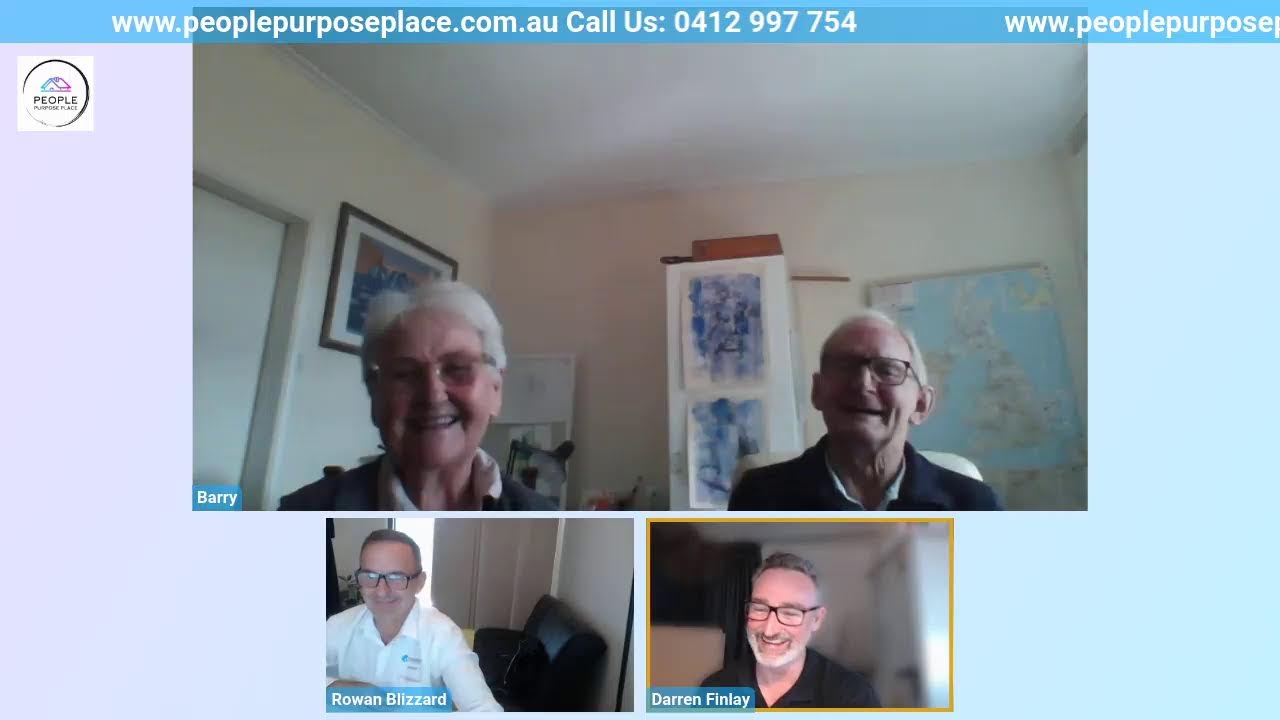
Welcome to Lunchtime with People Purpose Place! In this episode, Rowan from People Purpose Place is joined by his parents, Barry and Anne, to discuss the vital topic of aging and how to navigate the challenges that come with it. They share their experiences and offer insights into planning for the future, ageing with independence, and finding support within the community.

The Changing Landscape of Ageing

Beyond the challenges of ageing, the conversation delves into society’s changing landscape. With the number of people over 65 expected to double in the next 20 years, addressing this demographic shift’s financial, social, and emotional implications is crucial.

The Role of Wealth and Financial Planning

Barry and Anne emphasize the importance of financial planning for ageing individuals. They discuss how wealth can impact the ability to access care and support, highlighting the need for alternative solutions that maintain one’s savings. They also touch on the potential consequences of government policies and charges on inherited wealth.

The Value of Independence and Community

While ageing with independence and financial considerations are significant, the conversation also centers around the value of autonomy and community. Barry and Anne share personal stories of their experiences and the importance of maintaining connections with friends and family as they age. They stress the need for community support networks and the benefits of multi-generational living.

Supporting Independence Through Planning

The discussion also touches on the importance of planning for the future. Barry and Anne explore solutions such as creating multi-generational housing options and finding ways to support each other without sacrificing individuality. They highlight the need for open conversations and personalized approaches to ageing.

Navigating the Ageing Process

Barry and Anne reflect on their journeys and the challenges they have faced. They discuss the evolving perception of ageing and the shifting dynamics within families. While they acknowledge previous generations’ obligation towards caring for their parents, they also recognize the changing expectations and the need for a new approach.

The Complexities of Caring for Ageing Parents

Barry and Anne share their personal experiences of caring for their parents. They discuss the challenges of distance and the guilt that can arise when unable to provide hands-on care. They also highlight the importance of open communication and understanding the desires and needs of ageing parents.

The Significance of Planning and Communication

Planning for the future and discussing expectations is crucial in ensuring a smooth transition as loved ones age. Barry and Anne stress the importance of having conversations about ageing preferences and creating a plan that meets individual needs. They also acknowledge the difficulties in making decisions for ageing parents and emphasize the need for empathy and understanding.

According to the Harvard intergenerational study, which lasted nearly 80 years, our genes are part of healthy longevity, but joy is also fundamental.

Community Support and Connections

Barry and Anne emphasize the importance of community support and connections throughout the conversation. They discuss the impact of social isolation and the need for human connection within families and broader networks.

The Role of Community in Ageing Well

Barry and Anne highlight the role of the community in ageing well. They share personal anecdotes about the benefits of participating in group activities and maintaining connections with friends. They also discuss the challenges of finding support when traditional systems may fall short.

Creating Solutions Within Existing Communities

Barry and Anne acknowledge the difficulties in finding appropriate support within existing communities. They discuss the impact of closures, such as the recent closure of Anne’s gym, on social connections. They explore the idea of creating alternative solutions, such as shared caregiving or housing options, to ensure that individuals can maintain their independence while having access to support when needed.

Conclusion

Barry, Anne, Rowan, and Darren’s conversation highlights the importance of planning for the future and finding support within communities as individuals age. The goal may be to ageing with independence. They stress the need for open conversations, personalized approaches, and recognition of society’s changing dynamics. By addressing these challenges head-on, individuals can age independently, maintain connections, and create a fulfilling and meaningful life.

People Purpose Place home

Filed Under: People Tagged With: #housingforall

A Big Dialogue: Housing – What Do We Want To Achieve?

24 May 2024 Leave a Comment

People Purpose Place views in review

We have had the great pleasure and privilege to meet with many of these housing leaders, and there was much anticipation of the forum and proposed topic.

Dr Cameron Murray’s most recent book is one of our reference books.

Jackson Hills holds a strategic role in the Q Shelter

The Q Shelter organisation ably supports our community housing providers.

Natalie Rayment is a director of Wolter Consulting Group.

Among other things the Wolter Consulting Group assist with long term strategic planning for the future direction of local councils. Natalie is also a keen advocate for YIMBY.

For a discussion that has been very capably hosted, moderated and applying the “Brisbane Rule” for civil discussion. Brisbane Dialogues will certainly have my attention for any future events.

As an attendee I was really looking forward to a discussion of the key question “What do we want to achieve?”

This strikes me as a really helpful starting point and from a clarity about our intentions we can then apply our:-

  • Developed first world economy
  • Highly educated workforce
  • Historical understanding of 11 million dwellings
  • Community expectations

to actually deliver against the identified problem.

While much of the discussion was collaborative and well intentioned I am unsure that this question was really clarified into the necessary stark reality.

Housing what do we want?

While it seems quite a simple question my first thought is that there are many responses depending on where our current personal situation. As former NSW Premier is famously quoted as advising Paul Keating

‘Always put your money on self-interest, son. He’s the best horse in the race; always a trier.’

Former NSW Premier Jack Lang

The vast majority of guest were of a mature “late youth” demographic.

If you have lived through a period of continual property value growth and have amassed a personal wealth in property then ….

the status quo may look quite attractive.

  • you may have the capacity to assist family into the property market
  • you may believe in the establishment of a career and building wealth as the sensible path
  • you may not be aware yet of the Government impending financial challenge when this cohort doubles and we have two taxpayers to find each retiree rather than the 7 when the pension and superannuation systems were first imagined

For the “8” guest in the room experiencing a first hand housing crisis

You have likely started your careers without a free education and with your first full time employment have already incurred a significant HECS debt.

  • you may not believe that property ownership is even possible
  • you may expect to continue to rent all of your life including housing, books, music, clothes, sex and many of the essentials of life
  • the idea of a single career seems quite odd and unlikely with higher priorities than career building a gig economy allows for adaption and travel convenience

With these differences within our community, how is consensus even possible?

Our view is that the necessary elements are still common to almost everyone regardless of their current life stage or circumstances.

  • a place or private secure refuge
  • a place for communion with friends and family
  • some connection to nature
  • the possibility of getting your hands into the soil gardening or just being connected to nature
  • a place for revelry where telling stories (some might even be true) around the hearth

It strikes us that we are not all that different in our humanity, and in this discussion, we could do very well to keep that in mind.

Return to People Purpose Place home.

Filed Under: Education Tagged With: #housingcrisis

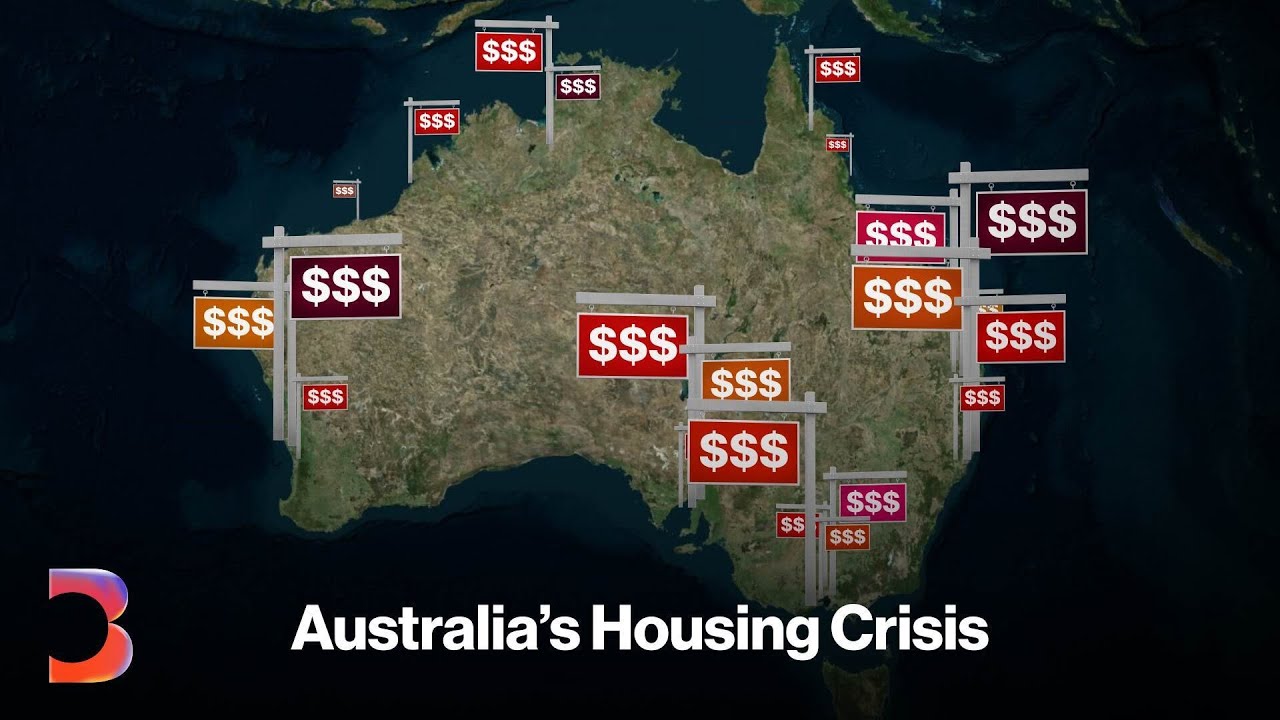
The Housing Crunch in Australia

22 May 2024 Leave a Comment

Challenges for Buyers, Sellers, and the Government

YouTube player
Bloomberg Originals https://www.youtube.com/@business

A Popular House with a Dark History

As an example of current property: Property inspection

Apparently, a hundred years ago, there were witches that lived here, but that hasn’t stopped it from being one of the most popular houses this year. There’s a huge hole as you walk in the front of the house, but we put a bit of plywood there, and we’re still recommending that people step over that if they can. Some of these houses are in such bad condition that we must get people to sign waivers to understand what they’re walking into. We’ve had over a thousand inquiries online, shown about 60 people through the home and sent out 30 contracts. With the market feedback, prices have been between 1.3 and 1.4 million, making it a great raw site for someone looking to renovate.

The Sydney Housing Market: A Bellwether of Property Prices

Alarms are going off in Sydney, known as Australia’s Bellwether Property Market. The coastal city ranks as the second least affordable housing market in the world among 94 major cities. This rush is very overwhelming; there’s not enough supply, and there’s too much demand

I’ve been selling in the area for the last 18 years. The Sydney Market is the strongest in Australia, and that has to do with the beaches and the accessibility to the City airports. It’s a fantastic location with a huge lifestyle scene, and I think it has the highest growing population out of all the Australian cities, and that’s always going to cause prices to go up. When land and homes are scarce, the toughest Market I’m finding for buyers is the low-income first-home buyers, who often look at one- or two-bedroom apartments. As you can imagine, when rates go up from two per cent to six per cent, that’s huge for someone on a single-income salary looking to buy their first home.

Ercan Ersan

The Housing Crunch in Australia: Causes and Consequences

The predicament is mirrored globally, from the UK to Singapore, with little to no signs of relief. So what’s driving this housing crunch, and what are the consequences for buyers, sellers, construction firms, and the government?

National home prices in Australia have risen 33% since the onset of the pandemic. At the same time, interest rates are markedly higher. Now, we’re seeing that because we’ve got very tight conditions with respect to the supply of stock on the market. We’ve also got the unemployment rate which is sitting around a multi-decade low, adding an additional sense of security for home buyers. So we’re continuing to see that housing demand has been bolstered by a strong rebound in net migration. The population of Greater Sydney is expected to grow by 1 million by 2041 to 6.1 million people. To cope with that influx, the state needs about 900,000 additional dwellings by then, according to government estimates. But the tight supply of homes for sale isn’t the only problem.

The Rental Market Crisis

Rental markets in Australia are incredibly challenged at the moment. We’ve got vacancy rates at or close to record lows in most Capital Cities Australia-wide. We’ve got a very strong demand for rent, which continues to outstrip the supply of available rentals. Less than one per cent of the country’s rental properties are available for occupancy, which is the lowest among comparable markets globally. The tight supply partly explains why house and apartment rent surged by 16% and 20% in the past year alone.

The Affordability Challenges for the Younger Generation

When we look at the affordability challenges that the housing market presents in Australia, we see that the younger generation of Australians are most impacted by these challenges, and also amongst those on lower income. 23-year-old Harry and his mother live on the outskirts of Sydney. Harry is a student with a part-time job with a two-hour commute each way. They’re bearing the brunt of the housing crisis, having been left with no choice but to move from house to house to house. Harry says, “The house we were put in previously, I think we started renting it for 470 or 500 a week. It rose to 550. We couldn’t keep up with the cost. My mum is a Catholic Primary School teacher. She’s lived in the area for 20-something plus years, and she can’t afford to live in the same area that she’s lived in.” Harry says they were evicted from their rental house in 2022 when they asked for repairs to the shower.

The Major Disruption of Your Life Housing Crunch

And then suddenly, they’ve just had to drop everything and spend all of their time looking for rental properties, just inspection after inspection, and applying for properties and not hearing anything back. One of the inspections they went to in a nearby suburb, they got there, and around 85 people counted. You don’t stand a chance when there are that many people going. It’s the same with the pitch. It’s kind of like, “Wow, you know, let me do a resume for my dog.”

The Challenges of Building More Homes

Hurdles remain for building more homes to ease the housing crunch. In the background, the construction collapses, with firms going bankrupt in the dozens. A pandemic-driven building boom is partly to blame. Construction firms had agreed to fix-price contracts with lockdown homeowners looking to fix up their properties. But then the cost of labor and building materials spiked along with inflation. According to the Builders Collective of Australia, houses are now 30% more expensive to build than before the pandemic. For some, any relief can’t come soon enough.

Incentivizing Social and Affordable Housing

One way to help alleviate the housing crunch in the Australian housing market is by incentivizing or increasing the supply of social and affordable housing for a portion of housing market participants that are so often overlooked and for whom it is crucial to be able to access stable and secure housing tenure. Across Australia, housing supply and housing affordability are a challenge. We are looking at opportunities to provide greater densification. We’re looking at providing more planning pathways for different types of housing typologies. Firstly, increasing the social housing stock.

“Where you live, it’s not just a roof over your head. It’s:-

  • community,
  • Where you build your family,
  • Where you build your networks,
  • How you get to know people,
  • Your sense of self.

We’ve recently received 610 million dollars from the Commonwealth government that will be directly put into social housing. The government contributes to social housing in the hundreds of hundreds of millions each year to ensure that we reinvest in both new and improved social housing stock. At the moment, every single aspect of renting in this country is centred around profit. The home is such an indescribable thing, and realistically you might not even get the privilege to own your own home at all.”

Summing it up

The housing crunch in Australia is a complex issue that has various contributing factors. The demand for homes and limited supply have increased prices and made it increasingly difficult for many Australians, particularly the younger generation and those on lower incomes, to afford suitable housing. The rental market is also experiencing a crisis, with incredibly low vacancy rates and soaring rental prices. Additionally, the challenges faced by construction firms in building more homes further exacerbate the situation.

To address these challenges, there is a need for increased investment in social and affordable housing and initiatives to incentivize the construction of new homes. By providing stable and secure housing options for all Australians, regardless of their income level, we can work towards creating a more equitable and sustainable housing market.

People Purpose Place home

Filed Under: Place Tagged With: #housingforall

Creating a Sense of Home: Beyond Bricks and Mortar

15 May 2024 Leave a Comment

YouTube player

The Importance of Home

When we think about home, we consider not just the physical structure itself but also the feeling of belonging, security, and safety that it provides. We’ve all experienced the joy of homecoming after a beautiful vacation or the comfort that a familiar space can bring. At People Purpose Place, our focus starts with the human component. When creating a sense of home the human element matters, rather than just the bricks and mortar.

Going Beyond Bricks and Mortar

While we are highly skilled in the technical aspects of construction, we believe that the human cost is the most significant factor. In our People Purpose Place conversation we like to start there. One of our ongoing projects is in the Atherton Tablelands community, where we are building a brand-new house on Ginn Road in Malanda. While this project is unique, it still serves the same purpose as any other regular house. We can provide you with links to learn more about this exciting construction site if you’re interested.

It is important to remember that this worksite is a construction zone right now. For your safety we kindly request that visitors refrain from wandering through it without supervision. Safety is our top priority, and we want to ensure everyone remains safe during construction.

Housing Challenges for Healthcare Professionals

One of the biggest challenges we face in this regional community is attracting healthcare professionals. Doctors, nurses, and allied health workers are in short supply, it is difficult to attract new workers to the community. Limited or no housing options make finding suitable accommodations difficult for these individuals. For instance, the officer-in-charge at Atherton police station shared their concerns about the housing. For three trainees who were posted to the region for 12 months they have limited options. A poor housing situation can negatively impact their perception of the community and their willingness to stay long-term.

For three trainees who were posted to the region for 12 months they have limited options. A poor housing situation can negatively impact their perception of the community and their willingness to stay long-term.

Officer In Charge Police Station

This housing issue significantly impacts the retention and attraction of healthcare workers. Access to quality housing options is crucial for creating a sustainable workforce in our community.

The Needs of the Elderly Community

Another audience we prioritize is the elderly community. As our parents age, we begin discussing their future housing needs. Many elderly residents enjoy where they currently live and they often do not want to leave. Factors such as a large property with challenging maintenance and potential health issues may force a change despite their wishes.

In 2018, the Royal Commission on Aged Care (Final Report Here) conducted a national inquiry into the circumstances of elders in institutional care. The findings were disheartening, revealing instances of neglect. As individuals responsible for the care and well-being of our parents, we must ensure that they receive the respect and support they deserve.

As someone who has witnessed the challenges of caring for aging parents, I understand the significant life adjustment it entails. The transition from independence to becoming a caregiver can be overwhelming. However, it is essential to recognize that institutional care is not the only option.

In some cultures, such as Bali, multi-generational living is the norm. Families adapt to accommodate new generations by building additional structures on their property. The elderly are not seen as a burden or sent to institutions. In these communities, the elderly are valued household members. While this may not be our current societal norm, alternative approaches to elder care are worth considering.

The People Behind People Purpose Place

At People Purpose Place, we are a diverse group of individuals united by a common goal. Our team includes professionals like Dr Malcolm Holz, who has even contributed to town planning legislation in Queensland. When we engage with local councils, we do so confidently. We know that our projects not only meet but exceed, the minimum requirements set forth by the town planning codes.

We believe in best practices and aim to provide a response that goes above and beyond what is expected. Our expertise and commitment ensure that every project we undertake is of the highest quality and serves the community’s best interests.

Summing up Great Homes

Creating a sense of home goes beyond the physical structure. It encompasses feelings of belonging, security, and safety. At People Purpose Place, we understand the importance of the human component when it comes to housing. Whether it’s providing suitable accommodations for healthcare professionals or addressing the housing needs of the elderly community, we strive to exceed expectations and create sustainable solutions.

By focusing on the people rather than just the bricks and mortar, we can foster a sense of home that benefits everyone in the community. With our team of dedicated professionals and a commitment to best practices, we can make a positive impact and create spaces that truly feel like home.

People Purpose Place home

Filed Under: People, Purpose Tagged With: #elderhousing, #housingfornurses, #housingforpolice

Tips for Creating a Successful Collaborative Home

8 May 2024 2 Comments

YouTube player

Information Session – Professional review

There are many factors to consider when creating a successful collaborative home. Whether you’re a seasoned professional or just starting, it’s important to have a solid understanding of the process and the best practices to follow. In this blog, we will explore valuable tips and insights that can help guide you in the right direction. This information session feedback was provided by an Architect with a passion for great homes and a local practice. Thanks, Stuart from “Life Design Consulting“. It really helps to have your input.

The Importance of Setting Boundaries

One of the key aspects of creating a successful collaborative home is establishing clear boundaries from the beginning. By having member agreements in place, you can ensure that everyone understands their responsibilities and expectations. This can greatly contribute to a smoother and more harmonious living environment. Additionally, setting boundaries can help prevent conflicts and misunderstandings down the line.

The understanding of why the toilet seat must be left Up/ Down is a simple example to start with in your household by way of example.

Challenging Fixed Mentalities

Challenging fixed mentalities when it comes to a great home is important. Many people have preconceived notions about what a home should be like and how people should live together. By introducing alternative perspectives and ideas, you can help broaden their understanding and create a more inclusive and open-minded community. Encourage discussions about what it means to have a shared meal or laundry facility and challenge traditional expectations.

Privacy vs. Shared Spaces

A common topic of discussion in a collaborative home is privacy versus common spaces. While some individuals value having their own private space, others are comfortable with shared bedrooms. Facilitating conversations around this topic and allowing people to express their preferences is essential. By finding a balance between privacy and common spaces, you can create a living arrangement that suits the needs of the household.

Image by pch.vector on Freepik

Personal Experience and Perspectives

Stuart shared his family’s personal experience of having six children and homeschooling them in the common bedroom. They explained that initially, all six children shared one bedroom, but as their family grew, they extended their house and created separate boys’ and girls’ rooms. However, they intentionally designed the bedrooms not to be completely private to avoid issues with screen time and other distractions. This example highlights the importance of considering individual preferences and finding solutions that work for everyone.

Image by freepik

Communities and Group Dynamics

Successful households can vary in size and composition. While some communities consist of single individuals sharing a house, others may involve groups of people sharing a property. In the latter scenario, having an odd number of members, such as five, can be beneficial to avoid potential deadlocks when making important decisions. This ensures that there is always an odd number of votes, making it easier to reach agreements. At People Purpose Place, our toolkit does suggest other tools may be necessary, such as sociocracy or better agreement-making methods rather than the loudest voice in the room.

Image by freepik

Intimate Relations and Small Groups

Throughout history, small groups have often been the ideal size for intimate relations and collaborations. This is why many successful homes have found that smaller groups, such as five people, work well. By keeping the community size manageable, it becomes easier to foster a strong sense of connection and cooperation among members.

Summing Up

Creating a successful collaborative home requires careful planning and consideration of various factors. By setting clear boundaries, challenging fixed mentalities, and finding a balance between privacy and common spaces, you can lay the foundation for a thriving and harmonious home. Additionally, understanding the dynamics of communities and the benefits of smaller groups can further enhance the overall experience for everyone involved. Remember, building a great home is a journey, and with the right approach, it can lead to a fulfilling and rewarding living arrangement.

People Purpose Place home

Filed Under: People Tagged With: #housingforall

Footer

People Purpose Place Pty Ltd
ACN: 659 425 242
ABN: 90 659 425 242
Fortitude Valley QLD 4006 hello@peoplepurposeplace.com.au
ACNC Registered Charity Logo
  • Facebook
  • Instagram
  • YouTube

Copyright © 2026 · Original Website by Boldacious Digital